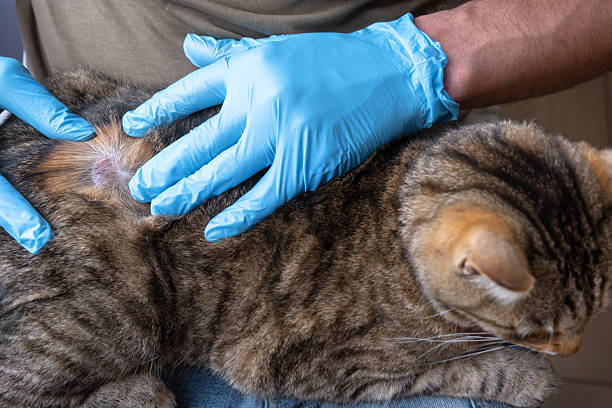
When people hear the word “ringworm,” they often imagine an actual worm. But ringworm is not a worm at all — it is a very common fungal infection that affects the skin, hair, and nails of both humans and animals. The medical term is dermatophytosis.
One of the biggest misconceptions we hear at cat salons and catteries is:
“My cat is indoor only, so they can’t get ringworm.”
Unfortunately, that is not true.
Indoor cats can absolutely develop ringworm, even if they never step outside.
Ringworm Is Extremely Common in Humans
Ringworm fungi are incredibly common in the environment and among humans. In fact, many fungal infections people experience — including athlete’s foot, jock itch, or fungal nail infections — are forms of ringworm.
Humans can unknowingly carry fungal spores on:
- Skin
- Clothing
- Shoes
- Bags
- Towels
- Luggage
- Gym equipment
- Public transport seats
- Hotel environments
People who travel frequently, visit gyms, work in hospitality, use public showers, or interact with many environments daily may accidentally bring fungal spores home.
That means your indoor cat may never meet another cat and still become exposed.
Yes — Humans Can Transmit Ringworm to Cats
Ringworm spreads through direct contact with infected people, animals, or contaminated surfaces.
While many people assume cats are always the source, transmission can also happen the other way around:
- Human to cat
- Cat to human
- Environment to cat
- Environment to human
This is why ringworm is called a zoonotic disease — it can move between animals and humans.
An owner may not even realize they have a mild fungal infection themselves. Sometimes it appears only as:
- Dry skin
- A small itchy patch
- Athlete’s foot
- Nail fungus
- Minor scalp irritation
Yet fungal spores can still spread around the home.
Indoor Cats Are Not Immune
Fungal spores are microscopic and surprisingly durable. They can survive on surfaces, fabrics, carpets, grooming tools, bedding, and furniture for long periods.
Even fully indoor cats can encounter spores through:
- Owners returning from travel
- Shoes worn inside the home
- Visitors
- Shared laundry
- Pet carriers
- Grooming equipment
- Apartment hallways
- Veterinary clinics
- Delivery boxes or contaminated items
Many online discussions from indoor cat owners report confusion after discovering ringworm in cats that never go outside.
Some Cats Show No Symptoms
Another difficult part about ringworm is that some cats can carry fungal spores without obvious lesions. Others may only show:
- Small bald patches
- Flaky skin
- Broken hairs
- Scabs
- Excessive grooming
- Irritated ears or paws
Long-haired cats can hide symptoms especially well.
Because symptoms can resemble allergies, stress grooming, or skin irritation, proper veterinary diagnosis is important.
Ringworm Is Common — Not “Dirty”
There is often unnecessary stigma around ringworm. The reality is:
- Ringworm is very common
- It does not automatically mean poor hygiene
- It can happen in extremely clean homes
- Even well-maintained indoor cats can be affected
Fungi exist naturally in the environment and are part of everyday life. Exposure is often unavoidable.
What matters most is early detection, proper treatment, and environmental cleaning.
Prevention Tips for Cat Owners
To reduce risk:
- Wash hands after handling unfamiliar animals
- Remove shoes indoors if possible
- Regularly disinfect grooming tools and carriers
- Wash cat bedding frequently
- Monitor for hair loss or skin lesions
- Seek veterinary advice early if suspicious patches appear
- Avoid sharing brushes or towels between pets
If someone in the household develops fungal skin issues, it is also wise to monitor pets closely.
Ringworm is one of the most misunderstood fungal infections in both humans and cats. Indoor living does not guarantee protection, and sometimes the source may actually come from human daily life and travel exposure rather than from another animal.
At the end of the day, ringworm is common, treatable, and manageable — but awareness and honesty are important to help reduce spread and protect both pets and people.
Source: photos from istocks
Cleverland Clicnic
Center for Disease Control and Prevention (CDC)