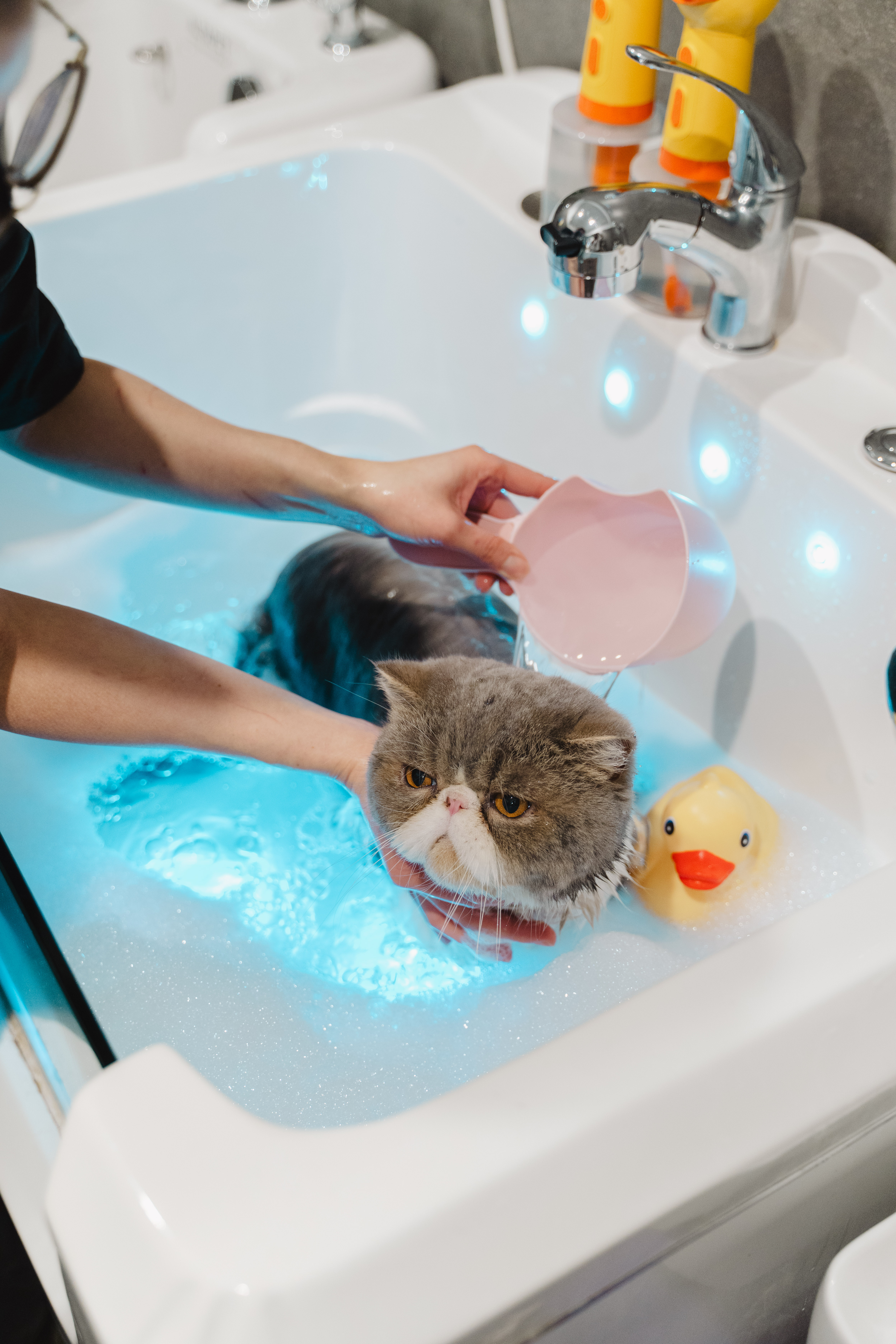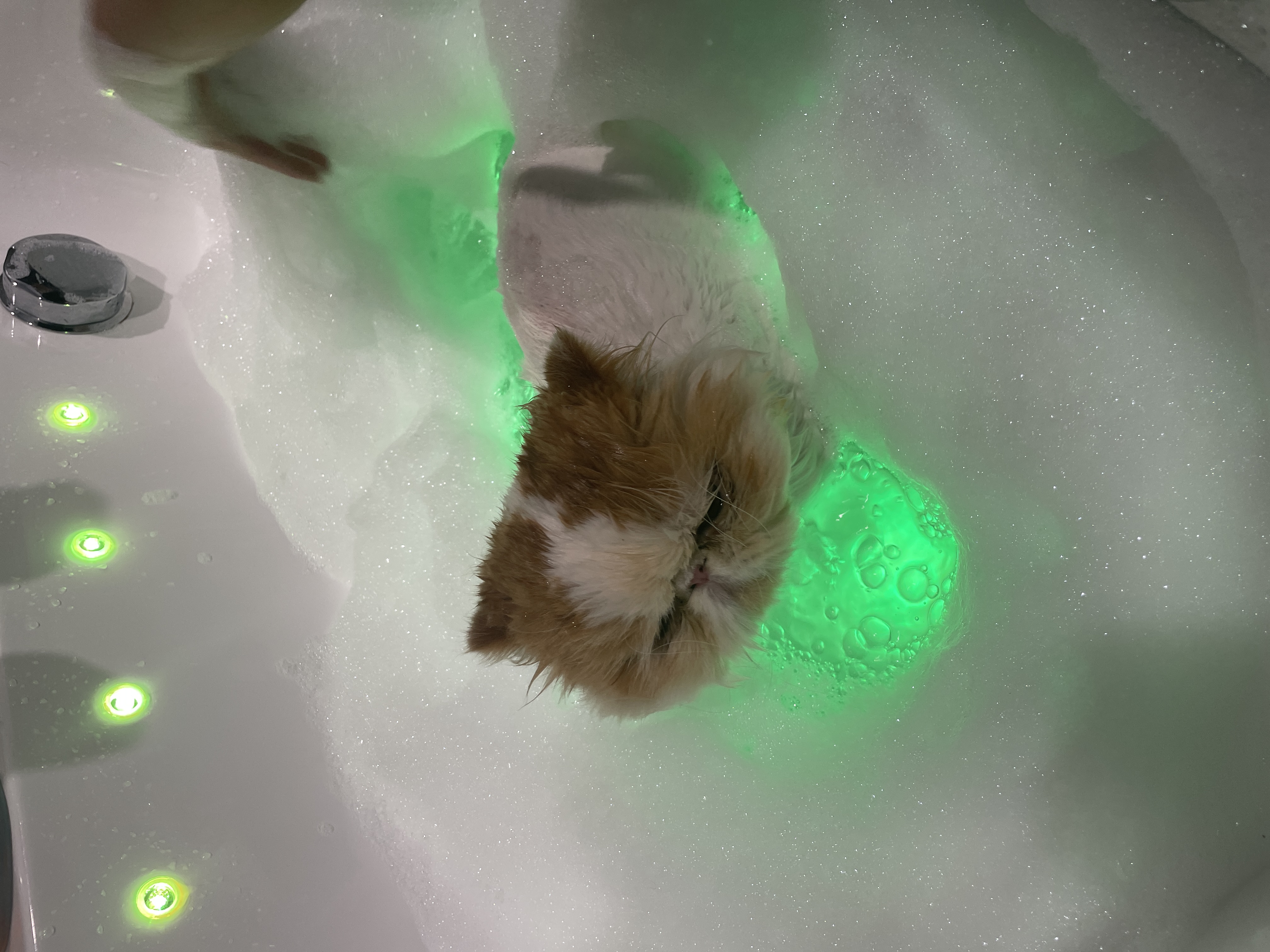
Persian cats are iconic — flat faces, expressive eyes, and luxurious coats. They are also one of the highest-maintenance cat breeds in the world when it comes to grooming.
Understanding the Persian Coat
Persians have:
- Extremely dense fur
- Fine, high-friction texture
- Heavy undercoat
- Slow natural shedding
This combination makes Persian coats exceptionally prone to matting, often forming within days if not properly maintained.
High-risk areas include:
- Neck and chest
- Belly
- Inner legs
- Underarms
- Around the tail
Recommended Grooming Schedule
✅ Every 6 weeks for mat-free fur
For many Persians, 6 weeks is the maximum safe interval. Some individuals may require even more frequent grooming depending on coat density and lifestyle.
Cost Expectations (Guide Only)
- Routine Persian grooming: full groom is ranging from $120 to $150
- Severe matting or shave-downs: highest cost category ranging from $50 - $80
Corrective grooming takes significantly more time and skill — and is far more stressful for the cat.
Why Matting Is a Health Risk
Mats can lead to:
- Skin inflammation and infection
- Trapped moisture and bacteria
- Restricted movement
- Overheating
- Hidden wounds
Once matting becomes severe, shaving is often the only humane option.
Shaving: A Last Resort
Many Persians require shaving not by choice, but due to delayed grooming. Shaving:
- Is stressful for many cats
- Often requires very short clip lengths
- Is entirely preventable with routine care
The Reality of Owning a Persian
Persians are not low-maintenance pets.Their coat requires commitment, consistency, and professional care.
When grooming is kept regular:
- Cats are calmer
- Sessions are quicker
- Costs are lower
- Coats stay healthy and comfortable