Image from https://catfoodtip.com/best-raw-cat-food/
When it comes to feline nutrition, there’s no such thing as a “superfood” in the trendy, human sense.For cats, superfoods are simply foods that deliver critical nutrients in the form their bodies are designed to use.
Cats are obligate carnivores. Their superfoods come from meat, organs, and seafood — not plants, powders, or supplements trying to mimic nature.
Here are some of the most powerful, species-appropriate superfoods we use and recommend.
1. Beef Green Tripe — The Forgotten Mineral Goldmine
Key nutrient: Manganese
Green tripe (unbleached, raw stomach lining of ruminants) is one of the rare natural sources of manganese in animal nutrition — a mineral essential for:
- Joint and cartilage health
- Enzyme function
- Metabolism and growth
Cats don’t need large amounts of manganese, but they do need some, and green tripe provides it in a highly bioavailable form.
Bonus: many cats find it incredibly palatable.
2. Oysters — Nature’s Multivitamin
Key nutrients: Manganese, copper, zinc
Oysters are nutrient-dense powerhouses, especially rich in:
- Zinc for skin, coat, and immune health
- Copper for red blood cell formation and connective tissue
- Manganese for metabolic support
Used in small, appropriate amounts, oysters can significantly boost mineral balance in a fresh food diet.
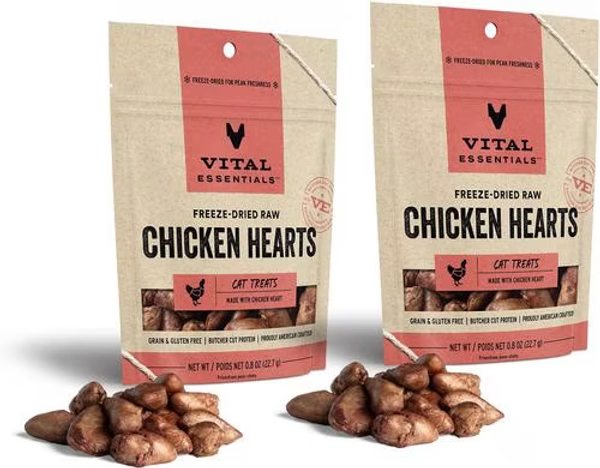
3. Chicken Hearts — Muscle Meat with a Mineral Boost
Key nutrient: Zinc
Chicken hearts are more than just muscle meat. They’re rich in:
- Zinc (important for immunity, skin, and healing)
- Taurine (essential for heart, eye, and neurological health)
Hearts are a staple in many raw diets because they support both structure and function in the feline body.
4. Liver (Beef or Lamb) — Copper Done Right
Key nutrient: Copper
Liver is non-negotiable in a balanced fresh diet.
It provides:
- Copper for iron metabolism and connective tissue
- Vitamin A (essential but must be controlled)
- B vitamins for energy and nervous system health
Because liver is potent, balance matters. A little goes a long way — but without it, deficiencies are inevitable.
5. Spleen (Beef, Lamb, or Pork) — Iron Support Without Synthetic Additives
Key nutrient: Iron
Spleen is one of the best natural sources of iron for cats, supporting:
- Oxygen transport in the blood
- Energy levels
- Overall vitality
Iron from whole food sources is gentler and more bioavailable than synthetic iron supplements.
6. Salmon, Sardines & Other Oily Fish — Vitamin D Matters
Key nutrient: Vitamin D
Unlike humans, cats cannot make vitamin D from sunlight. They must get it from food.
Oily fish provide:
- Vitamin D for calcium balance and bone health
- Omega-3 fatty acids for skin, coat, joints, and inflammation control
Fish should be used thoughtfully — as a nutrient contributor, not a main protein.
7. Egg York - Nature's Perfect Fat Package
Key nutrient: Omega-3 fatty acids
Egg yolk is a highly digestible, nutrient-dense addition to a fresh food diet for cats. It provides:
- Omega-3 fatty acids to support skin, coat, brain, and joint health
- Natural fats that improve nutrient absorption
- Choline for liver and neurological function
Egg yolk is especially helpful for cats with dry skin, dull coats, or low appetite. It should always be fed raw from a clean, trusted source or gently cooked, and used in moderation as part of a balanced diet.
Simple, whole, and biologically appropriate — egg yolk fits perfectly into a species-appropriate superfood list. 🥚🐾