Your cat was shaved a few months ago, and the coat that’s come back doesn’t look like the old one. It’s thin, fuzzy, maybe patchy, and maybe a lighter colour than before. Three months on, you’re wondering why it’s taking so long.
This is one of the most common questions we get after a shave or lion cut, especially from owners of British Shorthairs and other dense-coated breeds. The short answer: this is normal, and it takes time. Full regrowth can take anywhere from 3 to 18 months, and up to 24 months in some long-haired breeds. Here’s what’s actually happening.
01 — What You’re Seeing
Why your cat’s fur looks fuzzy after shaving
A cat’s coat isn’t one type of hair. It’s a mix of three:
- Guard hairs. The long, coarser outer hairs. They give the coat its length, colour, shine and texture.
- Awn hairs. A middle layer, shorter than the guard hairs.
- Down hairs. The soft, fine undercoat closest to the skin, which keeps your cat warm.
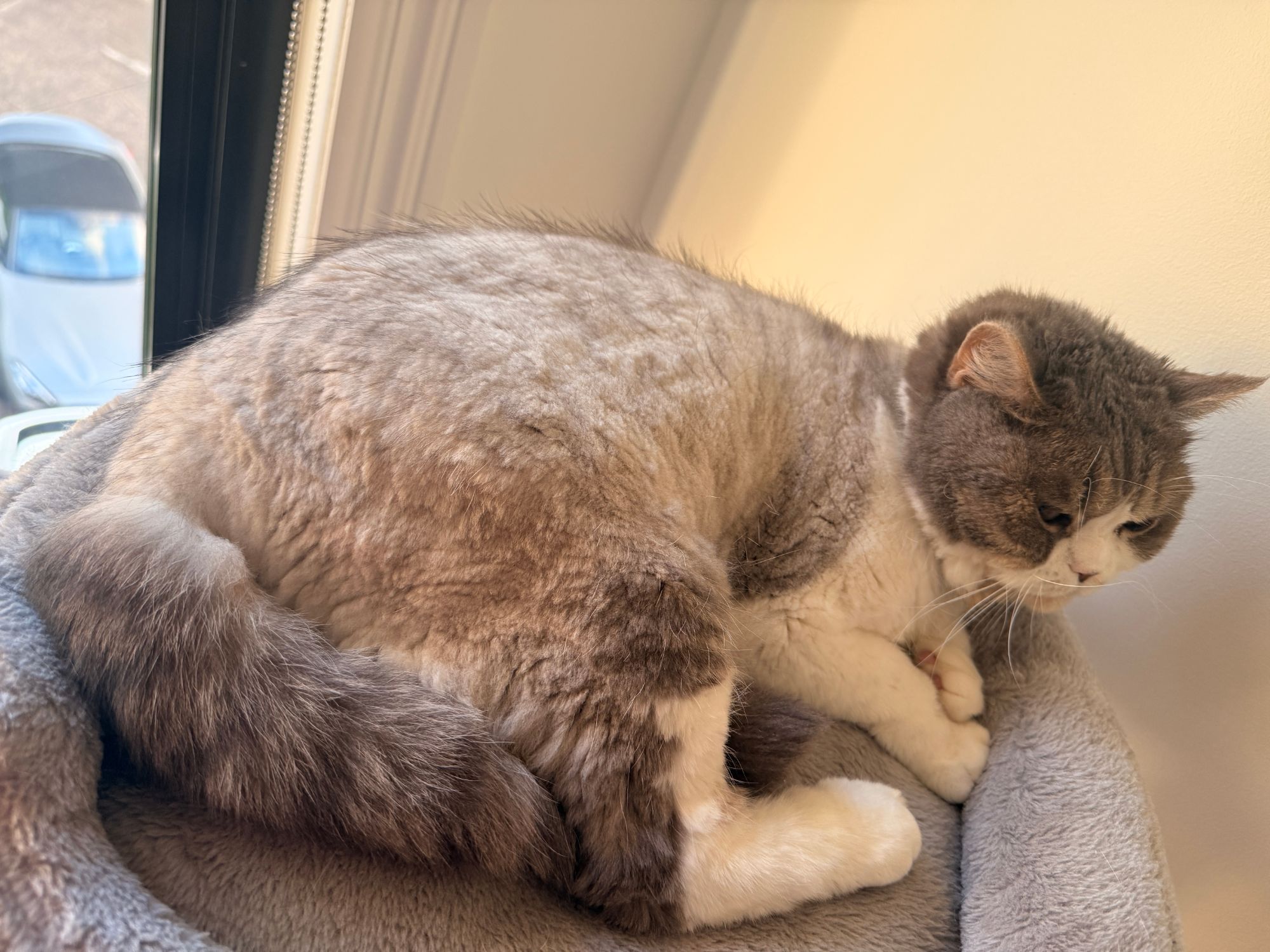
After a shave, these hairs don’t all grow back at the same speed. The undercoat (the down and awn hairs) usually sprouts back first. The guard hairs, which make the coat look like “your cat”, follow more slowly. Until they catch up, the coat looks and feels thin, fuzzy or velvety. Groomers often call this post-clipping regrowth.
Because the undercoat is often a different shade from the guard hairs, the regrowing coat can also look lighter, duller or a different colour for a while. You can see all of this in the photos below.


02 — The Slow Part
Why guard hairs take longer to come back
Guard hairs simply grow more slowly than undercoat. On top of that, shaving or repeated trimming can sometimes stall the guard hair follicles for a while. When that happens, the thicker, fuzzier undercoat dominates the surface of the coat until the guard hairs restart.
Every cat also has its own hair growth cycle. Hair follicles grow, rest, shed and start again, and they don’t all do it at the same time. If many follicles were in a resting phase when your cat was shaved, regrowth in those areas will be slower or patchier until they move back into a growing phase.
03 — The Timeline
How long does cat fur take to grow back after shaving?
For a coat to return to its original length, thickness and mix of guard hairs and undercoat, expect:
| Coat type | Typical full regrowth |
|---|---|
| Most cats | 3 to 18 months |
| Some long-haired breeds | Up to 24 months |
So if your cat was shaved three months ago and the coat still looks thin and fuzzy, that’s right at the start of the normal range. It doesn’t mean something has gone wrong.
Three months is early
At three months, many cats are still growing mostly undercoat. The guard hairs that give the coat its full colour and finish often take many more months to catch up.
04 — Dense Coats
Why British Shorthairs can take longer
Dense or double-coated breeds, including British Shorthairs, Exotic Shorthairs and Persians, may take longer to regrow, and the regrowth can be more uneven. Their thick, plush coats are what make them look the way they do, so the difference between a regrowing coat and the original one is easier to see.
Breed isn’t the only factor. Regrowth can also be affected by:
- genetics
- age
- diet and nutrition
- seasonal changes
- hormonal conditions
- overall health
- the cat’s natural hair growth cycle
Because of all these factors, no groomer can predict exactly how quickly an individual cat’s coat will grow back, or promise that it will look exactly the same as before.
05 — While You Wait
What you can do while the coat grows back
- Give it time. Patience is the main treatment. Compare photos month to month rather than day to day.
- Brush gently. A soft brush helps remove loose undercoat and keeps the new coat from tangling.
- Feed for the coat. Hair is built from what your cat eats. For the best skin and coat, we recommend a raw diet. Read more in our guide to raw feeding for cats, and talk to your vet before changing your cat’s diet.
- Watch the skin. Healthy skin under a fuzzy coat is fine. Red, flaky or irritated skin is not.
When to see a vet
Slow regrowth on its own is normal. Talk to your vet if you notice:
- unusual hair loss, or bald patches that are getting bigger
- skin irritation, redness, scabs or flaking
- no regrowth at all over a long period
- significant changes in coat condition, or your cat seems unwell
These signs can point to a skin, hormonal or other health issue that’s worth checking.
06 — Before Your Cat’s Shave
What we tell every owner before a shave or haircut
Before any shave, clip, lion cut, teddy bear cut or other haircut at XMMO, we ask owners to understand the following. It’s part of our terms and conditions:
- Regrowth is not guaranteed. The coat may take several months to over a year to fully regrow, and in some cases it may not return to its original appearance, thickness, texture, colour or length.
- Uneven or delayed regrowth can happen. When the undercoat grows back before the guard hairs, the coat can look thin, fuzzy, patchy or different for a while. This does not necessarily mean the grooming caused any damage.
- There is no guaranteed timeline. We can’t predict how quickly an individual cat’s coat will grow back.
- We’re here if you’re worried. If you notice unusual hair loss, skin irritation or a long-term lack of regrowth, please see your vet and let us know. Veterinary findings and photos help us review any concern properly.
None of this limits your rights under Australian Consumer Law.
Thinking about a shave?
Owners choose a shave for all kinds of reasons, like summer heat or less shedding around the house. If your cat has a dense coat, plan for the regrowth to take many months, and talk to us before you book about how short to go.
07 — FAQs
Cat hair regrowth after shaving: frequently asked questions
Why is my cat’s fur fuzzy after being shaved?
The soft undercoat usually grows back before the longer guard hairs. Until the guard hairs catch up, the coat looks and feels thin, fuzzy or velvety.
How long does it take for a cat’s fur to grow back after shaving?
Usually 3 to 18 months for the coat to return to its original length and thickness, and up to 24 months in some long-haired breeds.
Why is my British Shorthair’s fur growing back so slowly?
British Shorthairs have a dense, double coat. Dense-coated breeds can take longer to regrow, and the regrowth is often more uneven. At three months, a thin, fuzzy coat is normal.
Will my cat’s fur grow back the same colour?
The regrowing coat can look lighter or a different shade while it’s mostly undercoat. In most cases it changes as the guard hairs grow back, but sometimes the coat doesn’t return exactly to its original appearance.
Does slow regrowth mean the groomer did something wrong?
Not necessarily. Slow, uneven or fuzzy regrowth is part of the natural regrowth process. If you see skin irritation, unusual hair loss or no regrowth over a long period, see your vet.
Questions about your cat’s coat?
If your cat’s coat is growing back and you’re not sure whether it’s on track, call us on 0421 284 142 or send us a photo. We’re happy to take a look. You can also book a groom through Fresha.