You brush your teeth every day and see a dentist for a clean. Most cats get neither, until something goes wrong. By then they’re often older, the problem is bigger, and the only fix is treatment under general anaesthetic.
At XMMO, we think cat dental care should start much earlier, and it should start without anaesthesia. Here’s why, and what our ultrasonic teeth cleaning can do.
01 — Why Teeth Matter
Dental disease is one of the most common problems in cats
Plaque builds up on a cat’s teeth just like it does on ours. Left alone, it hardens into tartar, the gums become red and inflamed (gingivitis), and over time the disease works down below the gumline into the tissue that holds the teeth in place. That’s periodontal disease.
- It’s very common. Banfield Pet Hospital reported that 68% of cats over three years old had some form of oral disease.
- It gets worse with age. A large UK study found that cats aged 9 to 12 were 6.7 times more likely to have periodontal disease than cats under three.
- Cats hide the pain. Most cats with sore mouths keep eating. You may only notice bad breath, drooling, chewing on one side, or a cat who suddenly prefers soft food.
A healthy mouth is part of a long, comfortable life. That’s why we don’t think teeth should be left until a cat is old.
02 — The Anaesthesia Question
Why we start with non-anaesthetic cleaning
Every general anaesthetic carries some risk. The largest study of anaesthetic deaths in small animals, the UK’s CEPSAF study, found:
| Cats | Risk of anaesthetic-related death |
|---|---|
| Healthy cats | About 1 in 900 (0.11%) |
| All cats, including sick cats | About 1 in 400 (0.24%) |
The same study found that the risk goes up with age and poor health. That’s exactly when most cats end up needing a big dental procedure: when they’re older, the disease is advanced, and other health problems have appeared.
So our approach is simple. Keep the teeth clean from young, without anaesthesia, so that fewer cats need a major dental procedure later in life. For many owners, especially those with nervous or older cats, avoiding an anaesthetic wherever possible matters a great deal.
03 — Ultrasonic Teeth Cleaning at XMMO
What our non-anaesthetic ultrasonic teeth cleaning does
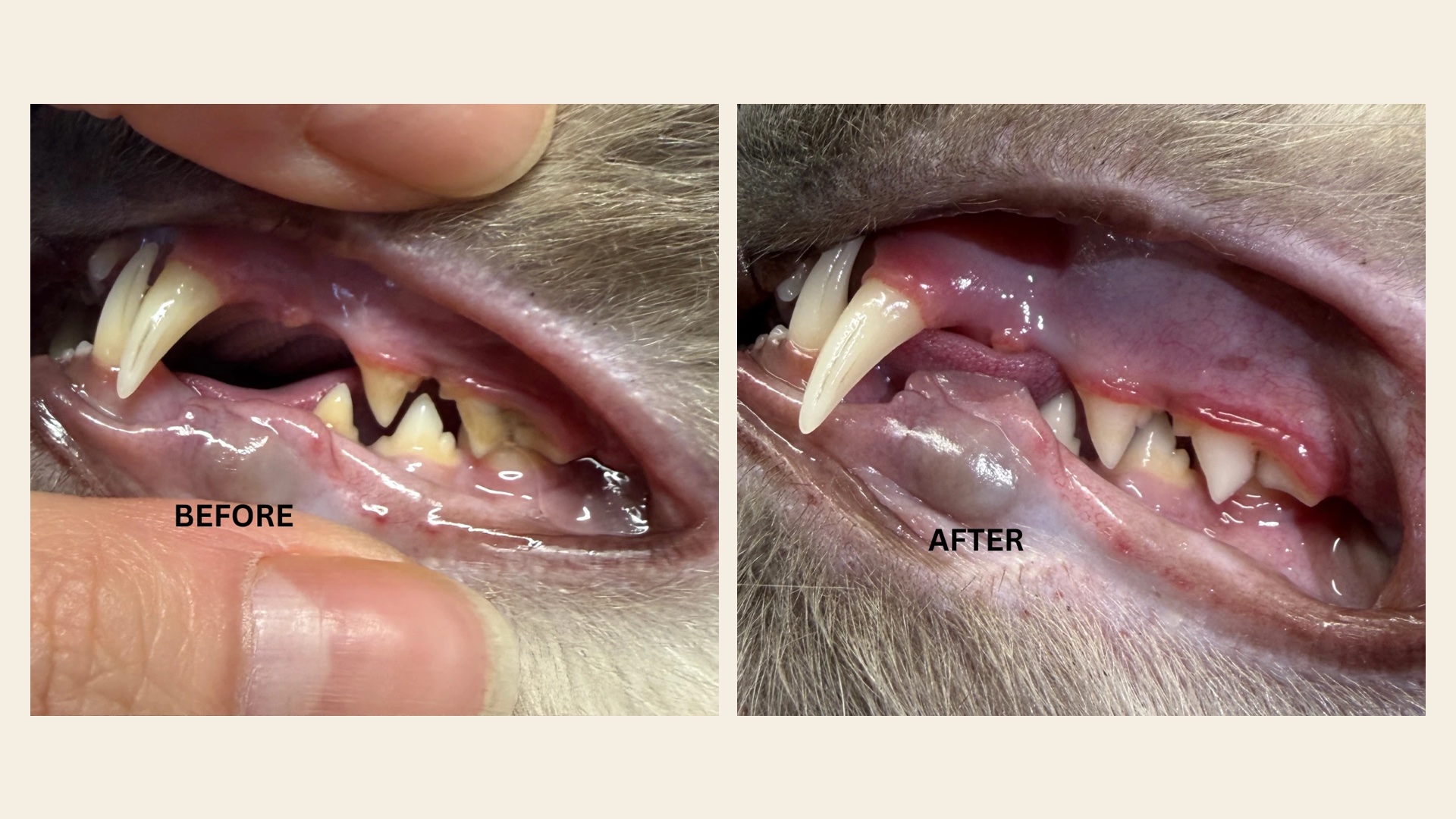
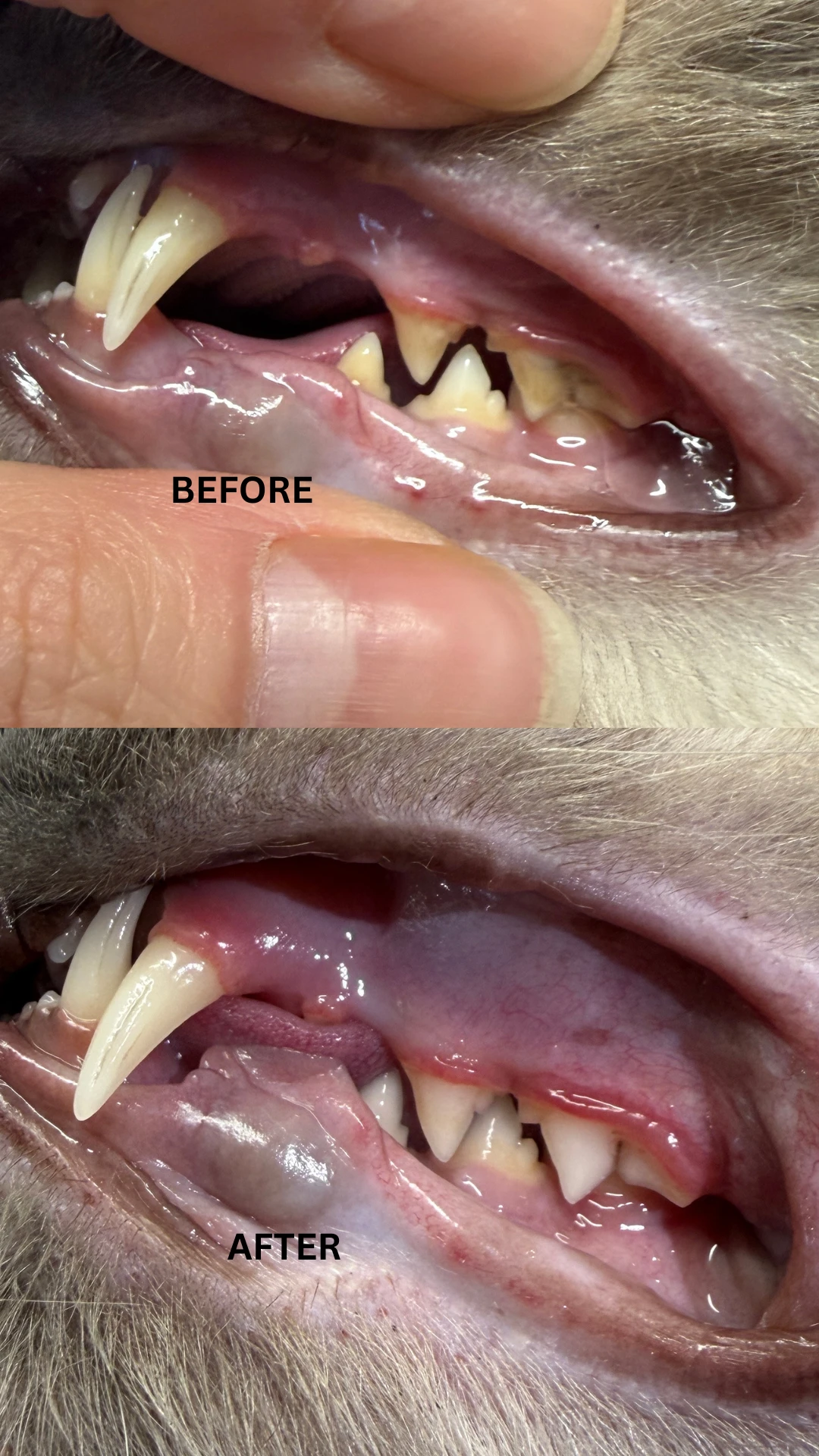
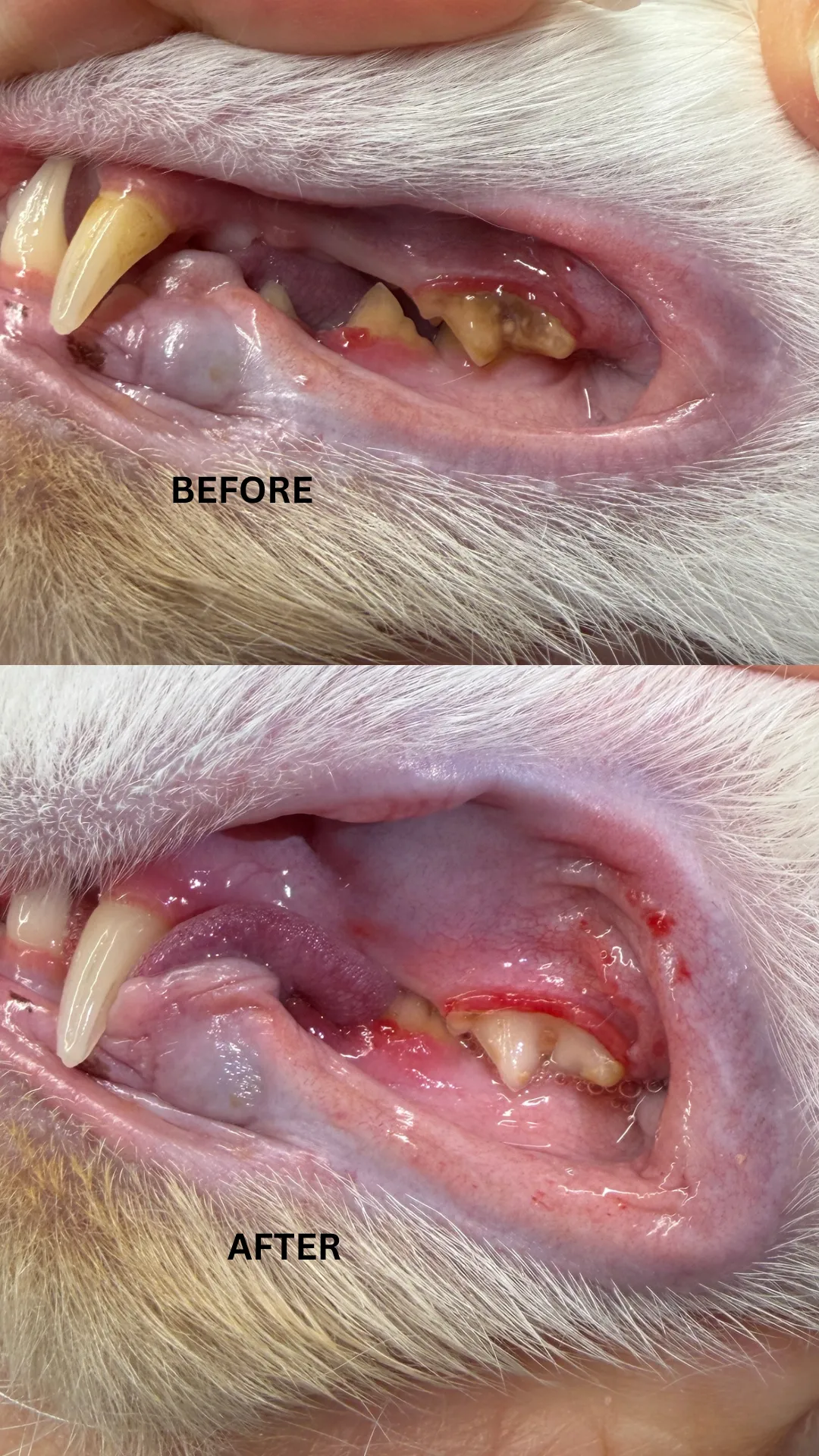
Our ultrasonic teeth service is done while your cat is awake, using the same Fear Free handling as every groom. An ultrasonic scaler uses fast vibration to break up plaque and tartar on the teeth, so they can be cleaned away without scraping.
- Removes plaque and tartar from the visible surfaces of the teeth.
- Freshens the mouth and helps keep gums healthier between visits.
- Gives us a regular look in your cat’s mouth, so changes are noticed early.
What it doesn’t do
We want to be clear about this. Non-anaesthetic cleaning works on the parts of the teeth we can see. It can’t clean below the gumline, take dental X-rays, or treat diseased or broken teeth. Veterinary bodies, including the Australian Veterinary Association, recommend a full dental examination under anaesthesia for that, and they don’t support non-anaesthetic cleaning as a replacement for it.
That’s why our cleaning is prevention and maintenance, not treatment. If we see red or bleeding gums, loose or broken teeth, or anything that worries us, we’ll tell you, and recommend you see your vet.
04 — A Routine, Not a Rescue
The dental routine we recommend
Cat teeth do best with the same kind of routine we use for our own:
| How often | What | Where |
|---|---|---|
| Every day | Brush your cat’s teeth with a cat toothbrush and cat-safe toothpaste | At home |
| Every 3 months | Ultrasonic teeth cleaning, booked together with your cat’s groom | XMMO |
| Every year | Dental check as part of your cat’s health check | Your vet |
The earlier you start, the better. A young cat with clean teeth and healthy gums is the easiest mouth to keep healthy, and a cat who is used to having their mouth handled finds brushing and cleaning much less stressful.
Don’t wait until your cat is a senior
Most dental disease we see could have been slowed down years earlier. A few minutes of brushing a day and a clean every three months is far easier on your cat than a major procedure in their old age.
05 — When to See a Vet
Signs your cat needs a vet dental check
- bad breath that doesn’t improve after cleaning
- red, swollen or bleeding gums
- drooling, or pawing at the mouth
- chewing on one side, dropping food, or going off hard food
- loose, broken or discoloured teeth
- a swelling on the face or jaw
06 — FAQs
Cat teeth cleaning without anaesthesia: frequently asked questions
Can cats have their teeth cleaned without anaesthesia?
Yes. At XMMO we use an ultrasonic scaler to remove plaque and tartar from the visible surfaces of the teeth while your cat is awake. It’s a maintenance clean. It doesn’t replace a vet’s dental exam and treatment when there is disease below the gumline.
How risky is anaesthesia for cats?
In the largest study of anaesthetic deaths in small animals, the risk was about 1 in 900 for healthy cats and about 1 in 400 across all cats. The risk is higher in older and unwell cats.
How often should I clean my cat’s teeth?
Brush at home every day if you can, book an ultrasonic teeth clean every 3 months with your cat’s groom, and have your vet check your cat’s teeth every year.
At what age should I start my cat’s dental care?
As young as possible. Kittens and young cats get used to having their mouth handled, and keeping teeth clean early helps prevent the disease that builds up with age.
Does ultrasonic cleaning hurt my cat?
On healthy teeth and gums it shouldn’t. The scaler uses vibration to break up tartar. Sore, inflamed gums can be uncomfortable, which is another reason to see a vet if your cat’s gums are red. We handle every cat the Fear Free way, and if a cat is too stressed, we stop.
Book your cat’s teeth clean
XMMO is a cat-only, Fear Free salon in Braybrook, Melbourne. Add an ultrasonic teeth clean to your cat’s next groom when you book online through Fresha, or call us on 0421 284 142.
Sources
- Brodbelt et al., The risk of death: the Confidential Enquiry into Perioperative Small Animal Fatalities (CEPSAF)
- VetCompass: the UK’s largest feline dental disease study (Royal Veterinary College, 2023)
- Banfield data on periodontal disease (dvm360)
- Australian Veterinary Association policy: anaesthesia-free dentistry in dogs and cats