What Is Matting Fur in Cats?
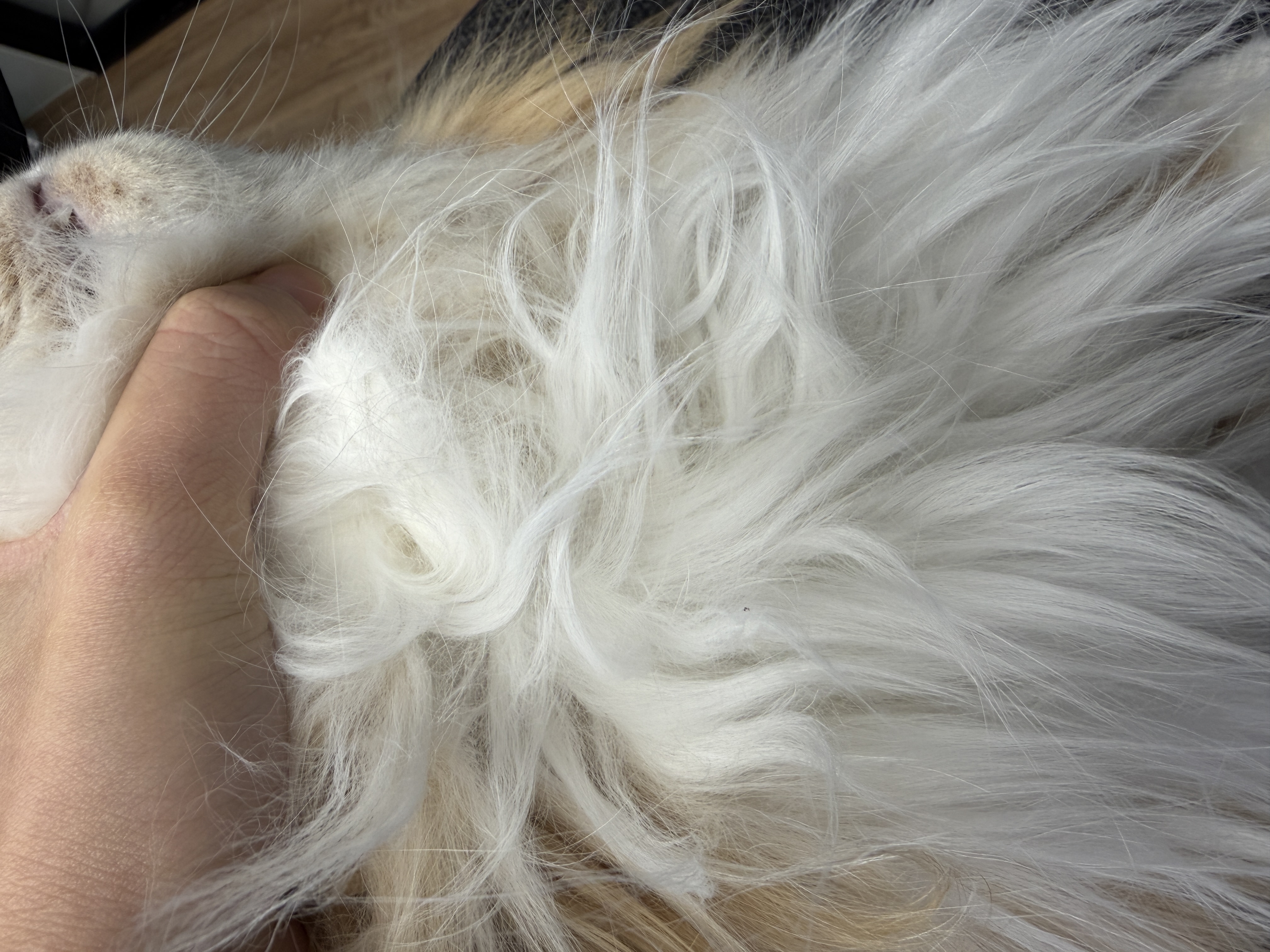
Matting refers to the process by which a cat's fur becomes densely tangled, knotted, and compacted into tight clumps or sheets that cannot be brushed out with normal grooming. Unlike a simple tangle — which can be gently teased apart — a mat is a structural change to the fur itself. The individual hairs twist around each other, interlock, and bind together until they form a solid, felt-like mass that sits close to or directly against the skin.
Mats can vary enormously in size and severity. In early stages, a mat might feel like a small, firm lump beneath the surface of the coat — easy to miss during a casual stroke. As it develops, it expands, drawing in more surrounding hairs and pulling tighter with every movement the cat makes. In neglected cases, individual mats merge together to form large, rigid sheets that cover broad areas of the body, effectively creating a second skin that traps heat, moisture, dirt, and bacteria underneath.
Unlike dogs, cats are fastidious self-groomers — which leads many owners to assume their cat's coat is always in good condition. But self-grooming has real limits. A cat's tongue can only reach certain parts of its body, and it cannot brush through a coat the way a comb can. For long-haired breeds especially, the daily volume of loose hairs shed from the undercoat is simply too great for self-grooming to manage alone. The result is that tangles form faster than the cat can address them, and without human intervention, they inevitably become mats.
The most common sites for matting are areas of friction and movement: the armpits, the collar region, behind the ears, the belly, and between the hind legs. These are spots where fur rubs against itself or against surfaces repeatedly throughout the day, causing hairs to gradually intertwine. Mats in these areas can also be the hardest to spot, since cats often resist having these sensitive spots touched — meaning a mat can grow for weeks before an owner discovers
Which Breeds Are Most at Risk?
Any cat can develop mats, but long-haired and thick-coated breeds are significantly more vulnerable. Their dense, fine fur tangles easily — and mats form faster than most owners realise.
Breed
Why They're Prone to Matting
Persian
Ultra-dense, silky coat that tangles overnight without daily brushing. The most high-maintenance coat of any domestic breed.
Ragdoll
Semi-long, plush fur that mats most severely at the collar, belly, and armpits due to constant friction.
Maine Coon
Triple-layered waterproof coat prone to deep, stubborn mats — particularly during seasonal shedding.
Norwegian Forest Cat
Seasonal shedding causes the dense undercoat to compress against new growth, felting from the inside out.
Birman
Soft, medium-long coat with a silky texture that lacks the natural oils to resist tangling.
Himalayan
A Persian cross that inherits the same demanding coat — requires daily grooming to stay mat-free.
Domestic Long Hair
Mixed-breed long-haired cats are often overlooked until mats become severe — any long coat needs attention.
Why Does Fur Mat in the First Place?
A mat begins as a simple tangle — loose or shed hairs that don't fall away cleanly, but instead weave themselves into the surrounding coat. Over time, friction, moisture, and body heat compress these tangles into tight, solid clumps that sit directly against the skin.
The Wet Coat Problem
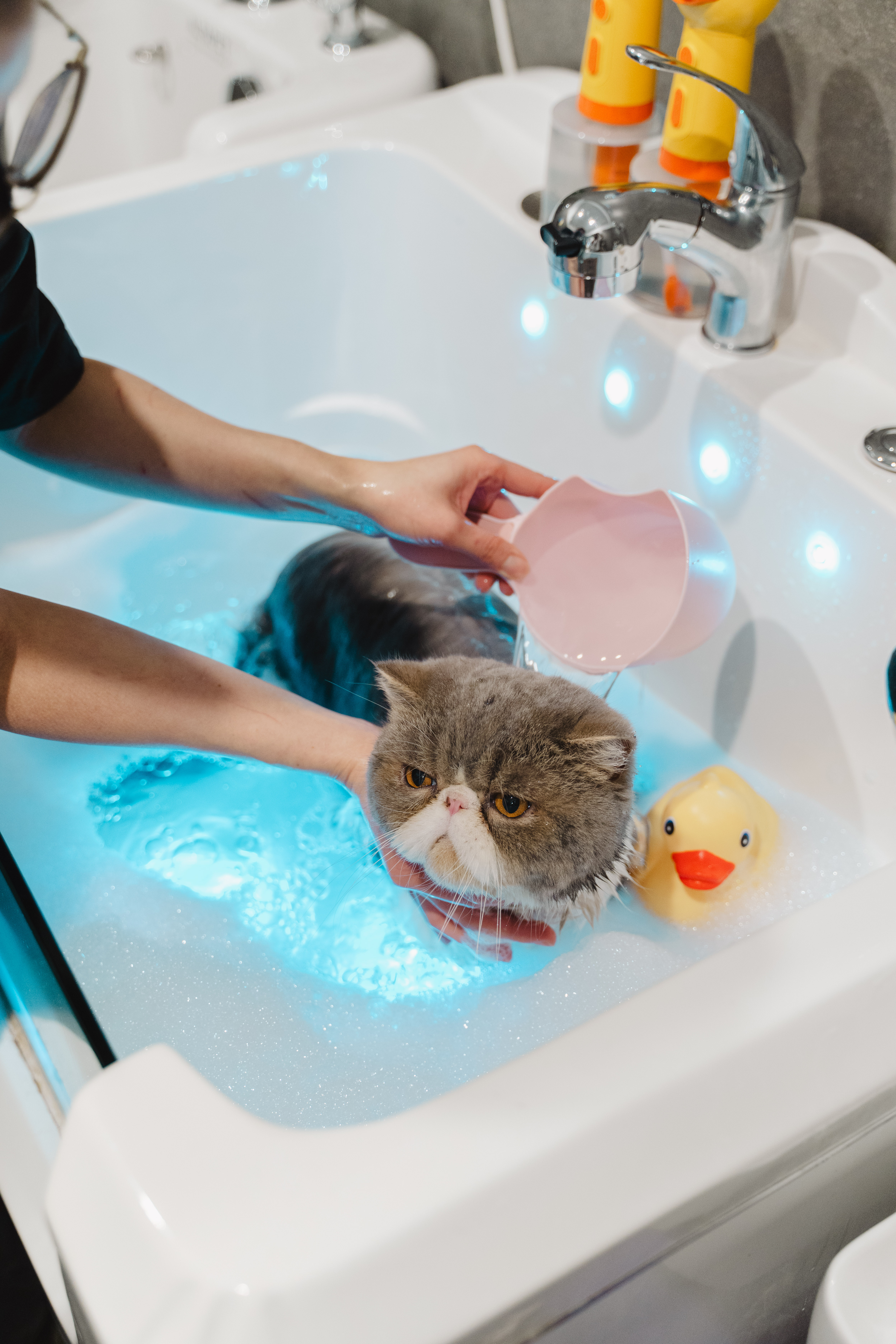
One of the most common — and fastest — routes to severe matting is getting your cat wet without brushing the coat through as it dries. When fur fibres absorb moisture, they swell and press together. As they dry without being separated, they lock into each other and form a mat that can be far tighter than anything that forms from dry friction alone.
The Wet Coat Rule
If your cat gets wet — whether from a bath, rain, or even a spill — always brush gently through the coat as it dries. Using a low-heat blow dryer on a cool setting while brushing prevents the majority of post-bath mats from forming. Never allow a wet long-haired coat to air-dry unsupported.
Other Common Causes
- Shedding seasons — dead undercoat hairs compress against new growth, felting from the inside out
- Overweight or elderly cats — cats who can't reach certain areas to self-groom develop mats in those spots
- Friction zones — the collar area, armpits, and between the hind legs mat with every movement
- Poor diet or health — dry, brittle, or oily fur mats much faster than a well-nourished coat
- Gaps in grooming — even one week without brushing during peak shedding season can create severe mats
Why Matting Causes Skin Infections
A mat doesn't just sit on top of the fur. It pulls tight against the skin, creating a sealed, airless pocket underneath. Warmth, moisture from normal body heat, and the accumulation of dead skin cells turn this pocket into an ideal environment for bacteria and yeast to thrive.
Why You May Not Notice Until It's Serious
Mats trap the skin underneath and hide it entirely from view. Redness, open sores, and discharge all develop out of sight. By the time a cat shows visible signs of discomfort — excessive scratching, biting at the area, or acting withdrawn — the infection is often already well established.
As a mat tightens over weeks or months, it begins to restrict blood circulation to the skin beneath. This prolonged pressure causes constant low-level pain, which many cats respond to by over-grooming the area — licking and biting at the mat, which introduces more bacteria and worsens any existing wound.
In severe or long-neglected cases, the skin underneath becomes ulcerated, weeping, or necrotic. Fly strike — where blowflies lay eggs in open wounds — is also a serious risk for outdoor cats with neglected mats, particularly during warmer months.
How Mats Progress Over Time
- Weeks 1–2: Surface tangle. Fur catches and knots, easily brushed out with the right tools.
- Weeks 3–4: Solid mat forms and begins to pull the skin. Uncomfortable but no visible wound yet.
- Month 2+: Skin begins to redden under the mat. Blood flow restricted. Bacteria accumulate.
- Untreated: Open sores, ulceration, discharge, and secondary infections requiring veterinary treatment.
Why Mats Leave Bald Spots After Removal
Many owners are alarmed when a shaved or removed mat reveals a bare patch of skin beneath — but this is entirely expected and has two distinct causes.
First, the mat itself physically contains many of the hairs from that area, so removing it takes fur with it. But more significantly, the prolonged tension and compression of a tight mat damages the hair follicles in the skin beneath. Follicles that have been crushed, starved of circulation, or subjected to chronic inflammation cannot produce new hair — sometimes temporarily, and occasionally permanently if the damage is severe enough.
How Long Does Regrowth Take?
In most cases where the skin underneath is healthy, fur regrows within 3 to 6 months. If the skin was infected or deeply damaged, regrowth may take longer — or in the most severe cases, a patch may remain permanently sparse. This is another reason why early intervention matters so much.
The skin left behind after mat removal is also often raw, sensitive, and at high risk of secondary infection. It needs to be kept clean and monitored closely. A vet visit is recommended whenever the revealed skin looks broken, weeping, or deeply reddened — even if the cat seems comfortable after the mat is gone.
How to Prevent Matting: A Practical Routine
The good news: matting is almost entirely preventable with a consistent routine. The following habits make the biggest difference for long-haired breeds.
- Treat wet coats immediately. Brush gently through the coat as it dries every time your cat gets wet. This single habit prevents the majority of post-bath and post-rain mats.
- Brush at home regularly. For Persian and Himalayan cats, daily brushing is essential. For Ragdoll, Maine Coon, and Norwegian Forest Cat, three to four times a week prevents most mats from forming.
- Focus on friction zones. Pay extra attention every session to the belly, armpits, behind the ears, around the collar, and between the hind legs — these are where mats almost always form first.
- Use the right tools. Use a wide-toothed comb first to catch tangles before they tighten, then follow with a slicker brush to smooth the coat. Never drag through knots — work from the tip toward the root.
- Book professional grooming regularly. Even with diligent home brushing, a professional groom every 6 to 8 weeks allows a thorough check for hidden mats and a full de-shed that home brushing can miss.
- Consider a lion cut for high-risk cats. For elderly, overweight, or very mat-prone cats, a professional lion cut during warmer months dramatically reduces grooming demands and keeps the coat manageable year-round.
- Support coat health from the inside. A high-protein diet with omega-3 and omega-6 fatty acids keeps fur strong and less prone to tangling. Ask your vet about whether a coat supplement is appropriate for your cat's breed and age.
- Never cut a mat with scissors. The skin beneath a mat sits far closer to the surface than it appears. Cutting toward the skin is a very common cause of accidental lacerations. If a mat is too tight to brush out, take your cat to a professional groomer or vet.
When to See a Vet or Groomer
If you find a mat that is tight against the skin, if your cat is showing signs of discomfort, or if the skin beneath looks red, broken, or weeping — don't try to manage it alone. A professional can remove it safely and assess any underlying infection that may need treatment. Regular grooming isn't a luxury — for long-haired cats, it is preventive healthcare.