01 — Why Sphynx Skin Behaves Differently
Every cat produces oil. Most cats never have to deal with it directly.
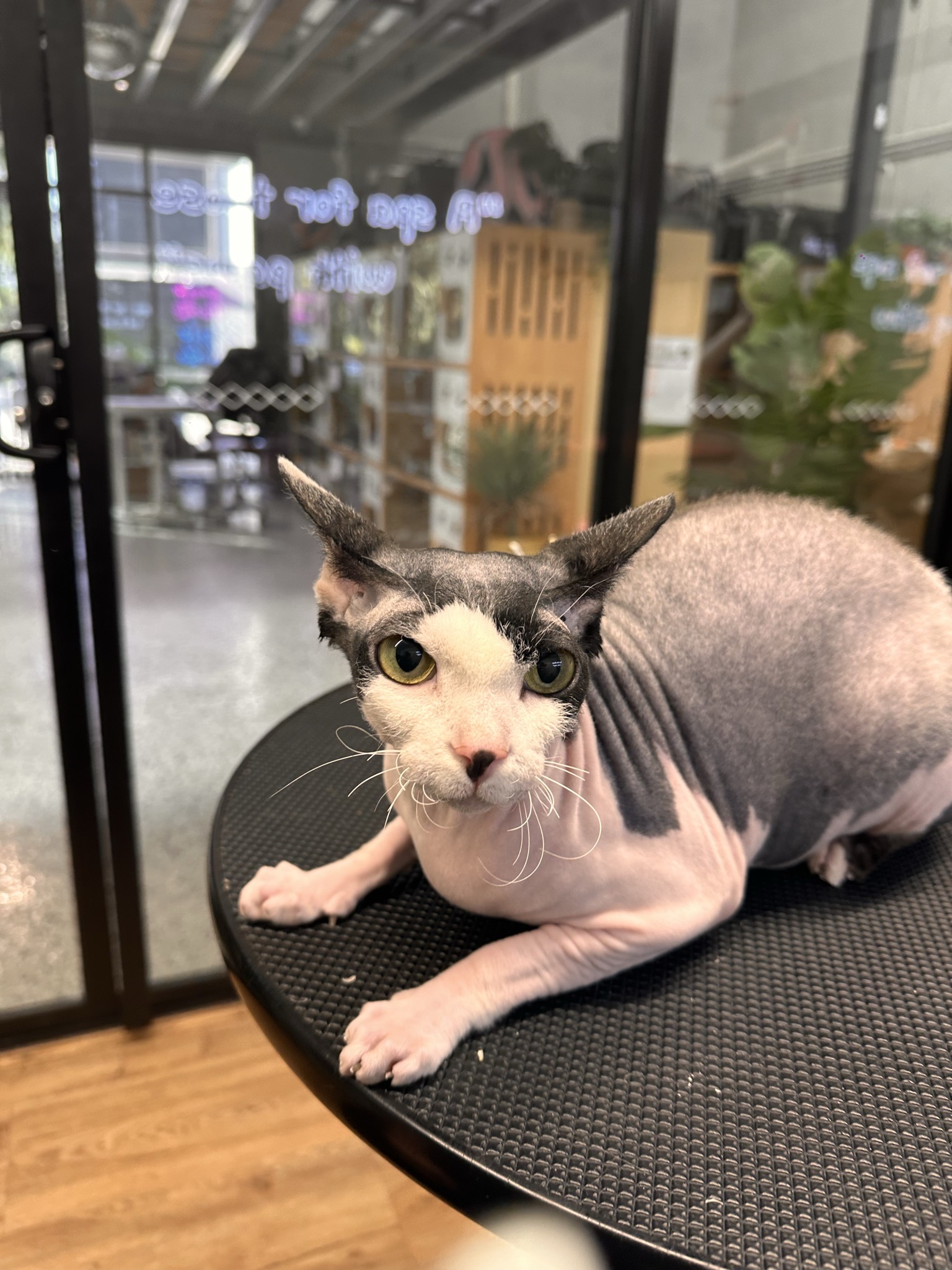
On a furred cat, sebum — the skin's natural oil — spreads along the hair shaft and gets distributed, absorbed, and partly self-managed through normal grooming. A Sphynx has none of that buffer. The oil sits directly on bare skin, with nothing to wick it away, which is why Sphynx cats can feel noticeably greasy within days of a bath and why it collects fastest in the skin folds around the neck, armpits, and tail.
This isn't a flaw in the breed — it's just what hairless skin does. But it means grooming isn't optional maintenance the way it might be for a short-haired cat. It's the main way a Sphynx's skin stays healthy at all.
02 — What We Use, and Why
Bare skin needs a completely different shampoo to fur.
Most cat shampoos are formulated with the assumption there's a coat between the product and the skin. On a Sphynx, the shampoo is going straight onto exposed skin — so the formulation matters far more than it does for a furred breed.
- pH-balanced for feline skin
- Fragrance-free
- Hypoallergenic formula
- Free from sulfates & parabens
- Gentle, non-stripping cleansers
- Soothing ingredients (oatmeal, aloe)
The goal isn't to strip every trace of oil in one wash. Over-cleaning bare skin can backfire — it dries the skin out and triggers rebound oil production, leaving your cat greasier than before.
What we avoid: human shampoo (too acidic for feline skin), dog shampoo (can contain ingredients unsafe for cats), and anything scented or harsh enough to disrupt the skin's natural balance.
03 — What Comes With Having No Fur
The oil isn't the only thing that behaves differently.
- Ears — wax builds up faster with no ear hair to trap debris, so they need checking more often than a furred cat's.
- Nails — dirt and oil collect around the nail bed more easily without fur to keep it clear, so regular trims matter even though there's no coat to maintain.
- Skin — exposed skin is more prone to blackheads and mild acne, and far more vulnerable to sunburn than a furred cat's.
None of this is high-drama — it's just the tradeoff of a coat that isn't there. A groomer who knows what to check on a hairless cat catches these early, the same way we'd catch a matting issue on a long-haired one.
WHAT WE RECOMMEND BOOKING
Sphynx wash routine: most Sphynx cats do well on a wash every 1–2 weeks, though the right interval genuinely varies cat to cat — some run oilier than others. Our Gentle Wash + Dry with Nail Clipping is the service we recommend building this rhythm around, since it covers the bath and the nail trim in one visit without the stress of a full coat clip your Sphynx doesn't need.
Watch for: a rusty or brownish tint to the skin, or a stronger smell than usual — both are signs it's time for a wash, whatever the calendar says.
A Sphynx's skin is doing, in the open, what every other cat's coat quietly handles underneath. Grooming them well just means treating that skin like the coat it actually is.