01 — The Myth We Hear Most
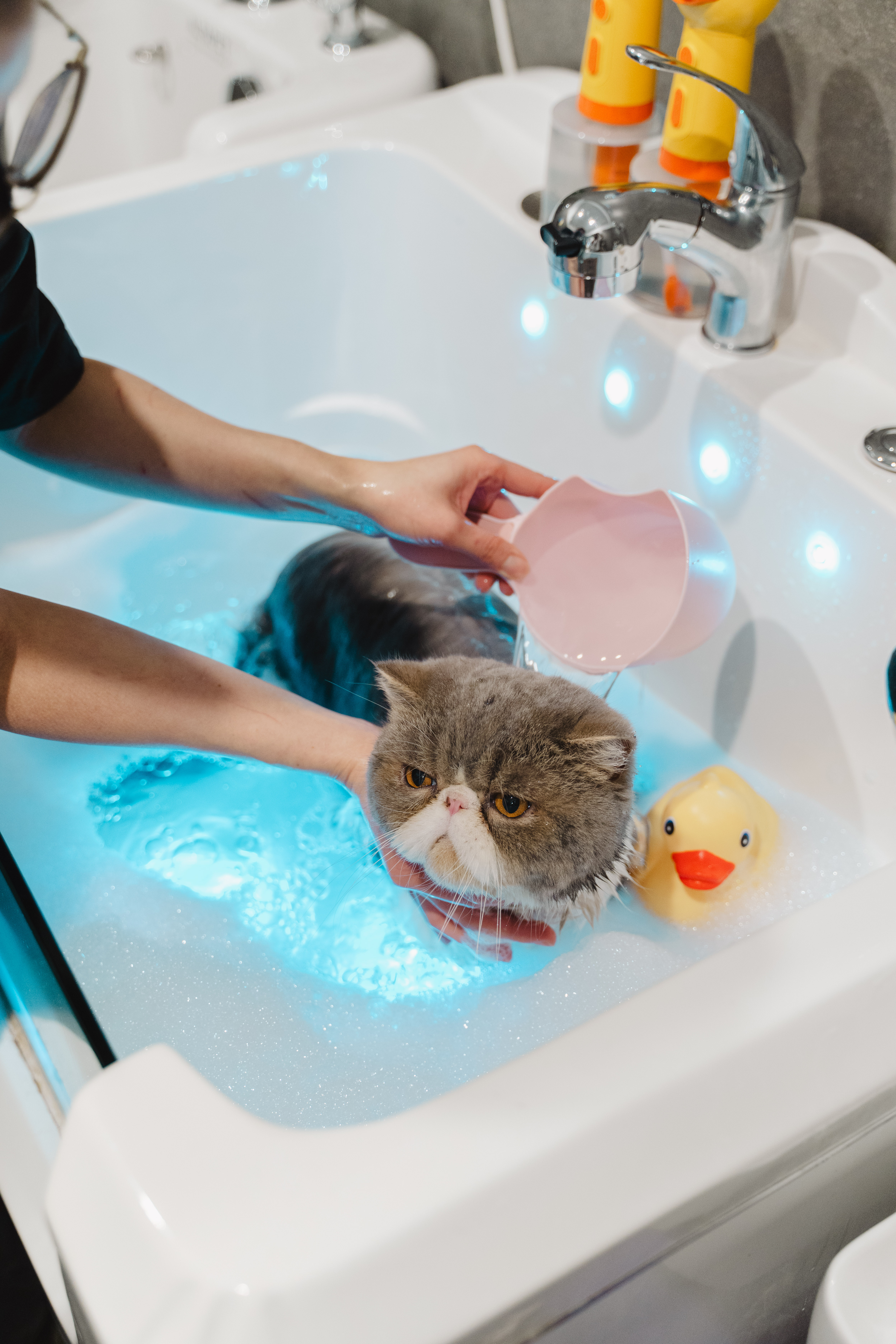
"Cats groom themselves, they don't need a salon." That's actually the problem, not the reassurance.
Self-grooming isn't a substitute for a grooming routine — it's the actual mechanism that creates hairballs in the first place. A cat's tongue is covered in hundreds of tiny, backward-facing hooks called papillae, which work brilliantly for catching loose fur, and less brilliantly for letting go of it. Whatever that tongue picks up gets swallowed. So the more a cat self-grooms without help, the more loose fur they're ingesting — not less.
For a short-haired cat with a light shedding load, that system genuinely keeps up most of the time. For long-haired, double-coated, senior, overweight, or arthritic cats, it doesn't. Some of these cats physically can't reach the areas that shed the most; others are simply shedding faster than their own grooming can process. "They groom themselves" quietly becomes "they're swallowing more than they can pass" — and nobody notices until a hairball turns into something worse.
Skipping a grooming routine because "the cat handles it" isn't neutral. It's choosing not to intervene in the one behaviour that's actually causing the buildup.
02 — What a Hairball Actually Is
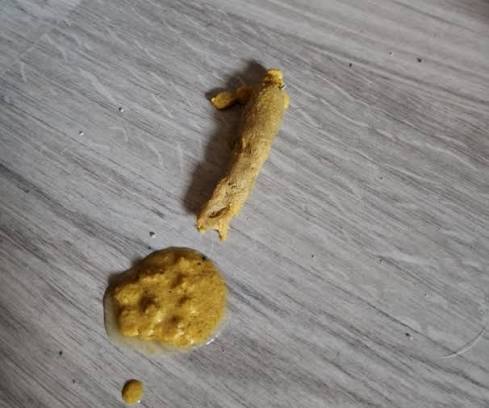
Not a ball. A cigar-shaped wad your cat's stomach couldn't fully process.
A hairball — technically a trichobezoar — forms when loose fur swallowed during self-grooming doesn't pass all the way through the digestive tract. Most of it does, without any issue. What doesn't pass can accumulate in the stomach, get shaped by the esophagus on its way back up, and come out looking more like a small cigar than a ball.
Vomiting one up occasionally isn't cause for alarm. The risk starts when a hairball grows too large to be brought back up and instead moves into the intestines, where it can partially or fully block the gut. At that point it stops being a grooming byproduct and becomes a genuine medical emergency.
03 — What Happens When It Becomes an Emergency
A blockage doesn't wait for a convenient time to show up.
A complete intestinal blockage is life-threatening and needs immediate veterinary attention — symptoms typically include repeated vomiting, loss of appetite, and abdominal pain. Left untreated, a full blockage can be fatal within days.
- $500 – $4,000+ — typical range for cat intestinal blockage surgery, per PetMD
- Up to $10,000 — for complex or emergency laparotomy cases, per veterinary cost data
Treatment depends on severity — some partial blockages respond to supportive care (IV fluids, laxatives) for a few hundred dollars, according to Cornell University's Feline Health Center. Full obstructions typically require surgery, and costs scale quickly with complexity and how emergent the case is.
The number that matters most isn't the dollar figure. It's that almost every severe case traces back to something preventable: fur that had nowhere to go but down.
04 — Why We Sometimes Recommend a Shave
Less fur on the cat means less fur swallowed by the cat.
For long-haired or heavily-shedding cats — especially ones already prone to matting or frequent hairballs — a full-body clip like our Lion Cut isn't just cosmetic. It directly reduces the volume of loose fur available to be groomed off and swallowed in the first place. It's the same logic as regular brushing, just applied more thoroughly, and it's often the most effective single intervention for a cat whose hairballs have become a genuine pattern rather than an occasional inconvenience.
This isn't the right call for every cat, and it's not a substitute for veterinary care if hairballs are already causing symptoms. But for a coat that's working against a cat's digestion every single day, a shave can take real pressure off the system.
WHAT ACTUALLY HELPS
Brushing & deshedding routine: daily brushing for long-haired cats, weekly for short-haired, removes loose fur before it's ingested during self-grooming — the single most effective everyday habit for reducing hairballs.
Cat grass: nibbling on cat grass (oat, barley, or wheatgrass) adds fibre to the diet and can help hair move through the gut — or come back up — more easily. Skip yard grass, which may carry pesticides; grown or purchased cat grass and cat grass treats are the safer option.
Hydration: a well-hydrated gut moves hair through more efficiently. Moisture-rich food and fresh, moving water both help.
A hairball on the carpet is annoying. A hairball you never see coming is the one that costs thousands and nearly costs a cat their life. Routine grooming is how you make sure it stays the first kind.
Cost and medical information referenced from Cornell University's Feline Health Center, PetMD, and CareCredit veterinary cost data. This is general information, not veterinary advice — if your cat shows repeated vomiting, loss of appetite, or abdominal pain, see a vet promptly.