What is a double coat?
A double coat is exactly what it sounds like — two distinct layers of fur working together. The outer layer, called the guard coat, is made up of longer, coarser hairs that repel moisture and protect against the elements. Beneath it lies the undercoat: a dense, soft, woolly layer that acts as insulation — keeping your cat warm in winter and, surprisingly, cool in summer by trapping air close to the skin.
Not all cats are created equal in the fur department. Single-coated cats have only guard hairs, making their coats sleek and much easier to manage. Double-coated cats, by contrast, are nature’s little luxury products — stunning to look at, but requiring significantly more maintenance to keep healthy and mat-free.
QUICK SCIENCE
The undercoat sheds seasonally in a process called “blowing coat” — particularly in spring and autumn. During this time, shedding can be dramatic and mats can form rapidly if the loose undercoat isn’t removed regularly.
Which breeds have a double coat?
Many of the world’s most beloved and recognisable cat breeds carry a double coat. Here are the most common ones you’ll see in the salon:
Maine Coon
Long, shaggy top coat with a silky undercoat. One of the heaviest double-coated breeds.
Persian
Extremely dense undercoat beneath a long, flowing guard coat. Highly prone to matting.
Norwegian Forest Cat
Thick woolly undercoat with a water-resistant top coat built for Scandinavian winters.
Siberian
Triple-layer coat with a dense undercoat that sheds heavily twice a year.
Himalayan
Persian body type with Siamese colouring, inheriting the Persian's dense double coat.
British Shorthair
Dense, plush double coat despite shorter length. Surprisingly thick for a shorthair.
Scottish Fold
Dense double coat similar to the British Shorthair, often overlooked by owners.
How to groom double-coated cat at home
Owning a double-coated cat is a joyful, fluffy commitment — but it comes with real responsibilities. Understanding your cat’s double coated helps you groom them better by staying ahead of the matting, shedding, and skin issues that can arise if the undercoat is neglected.
Brush regularly — and the right way
• Aim for brushing 3–5 times per week using a slicker brush and a de-shedding tool.
• Always brush all the way down to the skin, not just the surface coat.
• Surface-only brushing lets the undercoat compact into mats over time.
Never shave without a reason
• The undercoat regulates body temperature in both directions.
• Shaving a double-coated cat can cause overheating and coat damage.
• Always consult your groomer before reaching for the clippers.
Bathing helps, but dry thoroughly
• Water can reach the undercoat and cause it to tangle or felt if not fully dried.
• A high-velocity dryer lifts and separates the undercoat while drying — a regular towel isn’t enough.
Watch for hidden mats
• Mats often hide underneath — behind the ears, in armpits, and around the collar area.
• They tighten against the skin and can become painful or cause sores.
• Check weekly with your fingers, not just your eyes.
Don’t DIY serious mats
• If a mat is tight to the skin, leave it to a professional.
• Scissors near a mat are a common cause of accidental skin cuts at home.
• A groomer has the right tools to safely remove them without causing pain.
Book seasonal salon visits
• Spring and autumn shedding seasons are critical periods.
• A professional de-shed treatment every 4–8 weeks during these periods makes a dramatic difference.
• Regular visits reduce the time, cost, and discomfort of each appointment.
What happens at the salon — and why the double coat fee exists
When your double-coated cat comes to us at XMMO, we don’t just give them a quick brush and call it done. A proper double coat groom is a multi-step process that takes significantly more time, product, and specialised technique than a standard single-coat groom. Here’s exactly what we do — and why it costs more.
WHAT’S INCLUDED IN A DOUBLE COAT SERVICE
Pre-bath brush-out
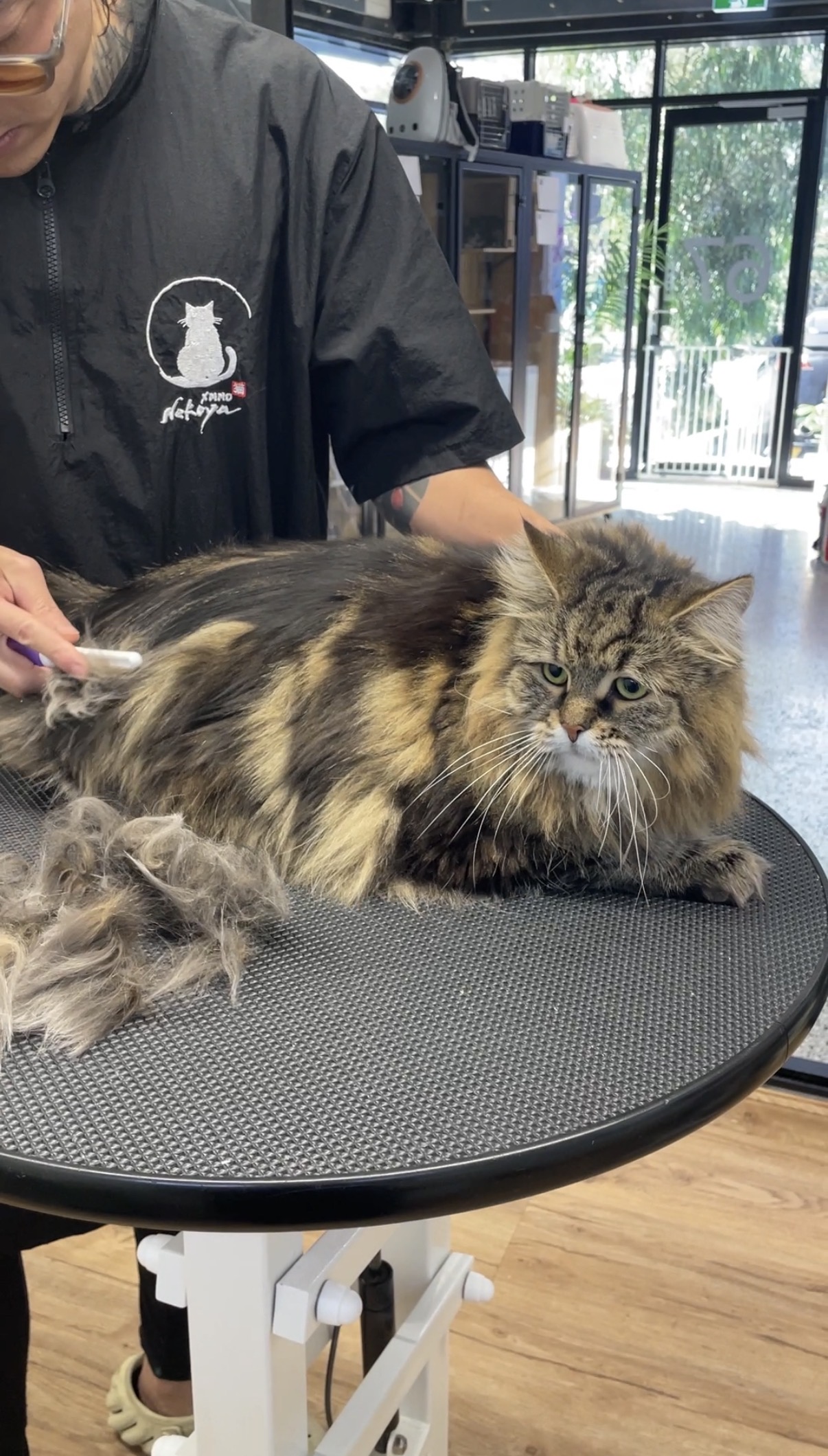
Before the bath, we do a thorough dry brush, undercoat rake, and de-shedding tool to loosen and remove as much dead undercoat as possible. This can take 10-20 minutes for heavily coated breeds.
De-shed shampoo & conditioner
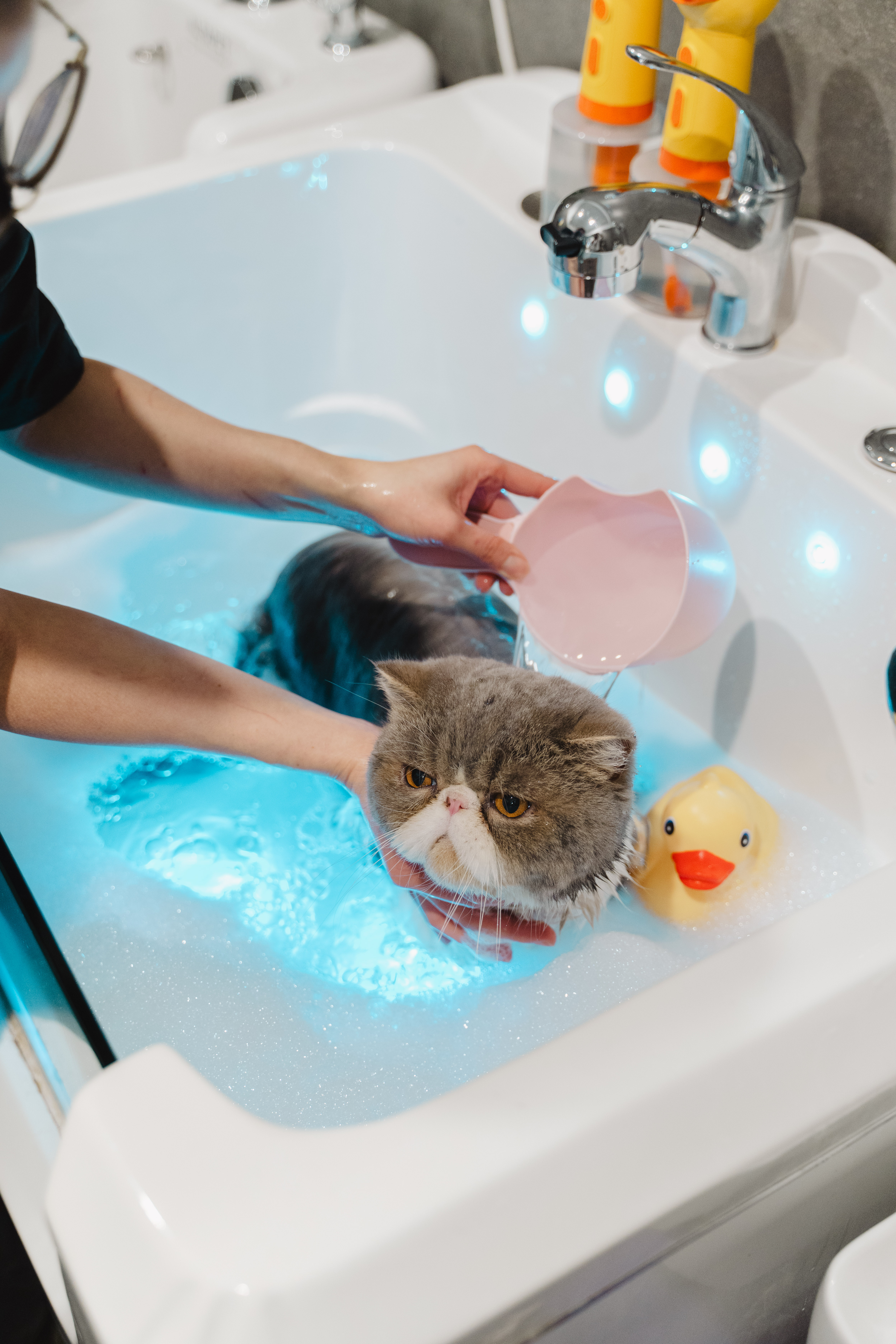
We use professional-grade de-shedding shampoos that open the hair follicle and release trapped undercoat. A conditioning treatment follows to protect the guard coat and reduce static that causes tangling.
Hand blow-dry
A hand dryer is used to blow out the undercoat while drying — this step alone can remove enormous amounts of loose fur. It requires specialised equipment and careful technique for cat safety.
Post-bath brush-out
After drying, we do a second thorough brush-out. Any remaining mats are carefully worked through or, if necessary, safely clipped out. This step adds significant time depending on the coat’s condition.
Time — the real reason
A standard single-coat groom may take 45–60 minutes. A double-coated cat in good condition takes 90 minutes to 2+ hours. The double coat fee reflects the additional time, product, and expertise — not a penalty, but a fair reflection of the work involved.
Mat surcharges
If your cat arrives with significant matting, an additional mat removal fee may apply on top of the double coat fee. Regular salon visits and home brushing are the best way to keep this extra cost down.
OUR HONEST ADVICE
The double coat fee isn’t something we invented to charge more — it’s a reflection of real, additional labour. The good news? The more regularly you bring your cat in and maintain brushing at home, the easier (and more affordable) each visit becomes. A well-maintained double coat is a pleasure to groom.
“A double coat is one of nature’s finest achievements — it just needs a little help from humans to stay that way.”