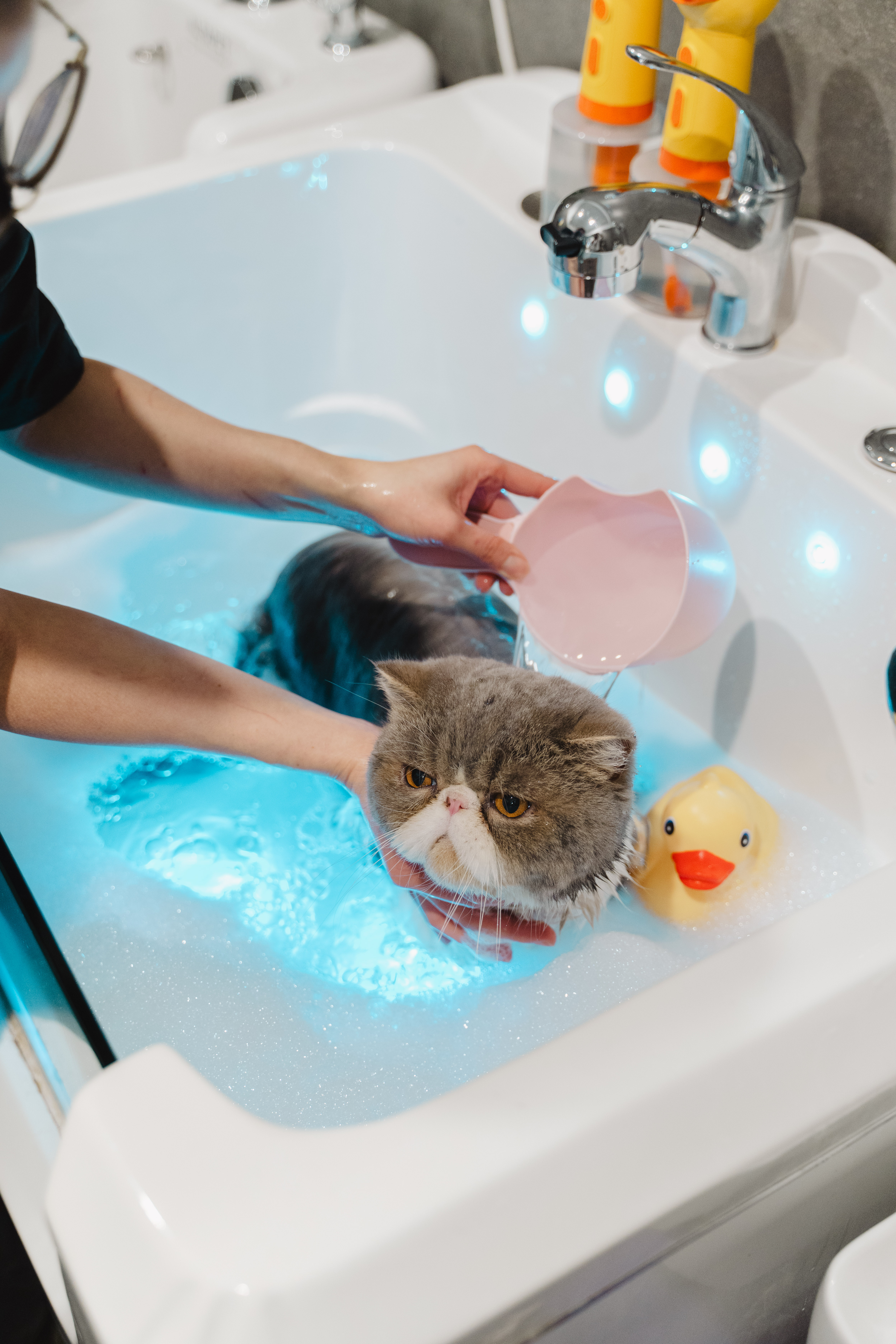
01 — What We're Actually Checking For
Every groom is also a skin check. That's not an add-on — it's the job.
Part of what a groomer is trained to notice isn't just fur length or a tangle — it's the skin underneath. At XMMO, every groomer works from the same reference used across our Cat Academy: nine skin and coat conditions staff are trained to recognise on sight, because some are cosmetic, some are contagious, and knowing the difference protects the cat in front of us and every other animal booked that day.
Seborrheic dermatitis is one of the ones that's easy to miss at home, because it doesn't announce itself with limping or obvious pain. It just quietly changes the coat — which is exactly why a regular set of hands on your cat, on a schedule, catches it earlier than an owner glancing at their cat between pats.
02 — What Seborrheic Dermatitis Actually Is
Not "greasy fur." A disrupted skin barrier.
Seborrheic dermatitis is a skin condition where sebum — the skin's natural oil — stops being produced normally. It can be primary, a genetic tendency seen mostly in breeds like Persians, or far more commonly secondary — a symptom of something else going on, such as allergies, hormonal imbalance, or an underlying infection.
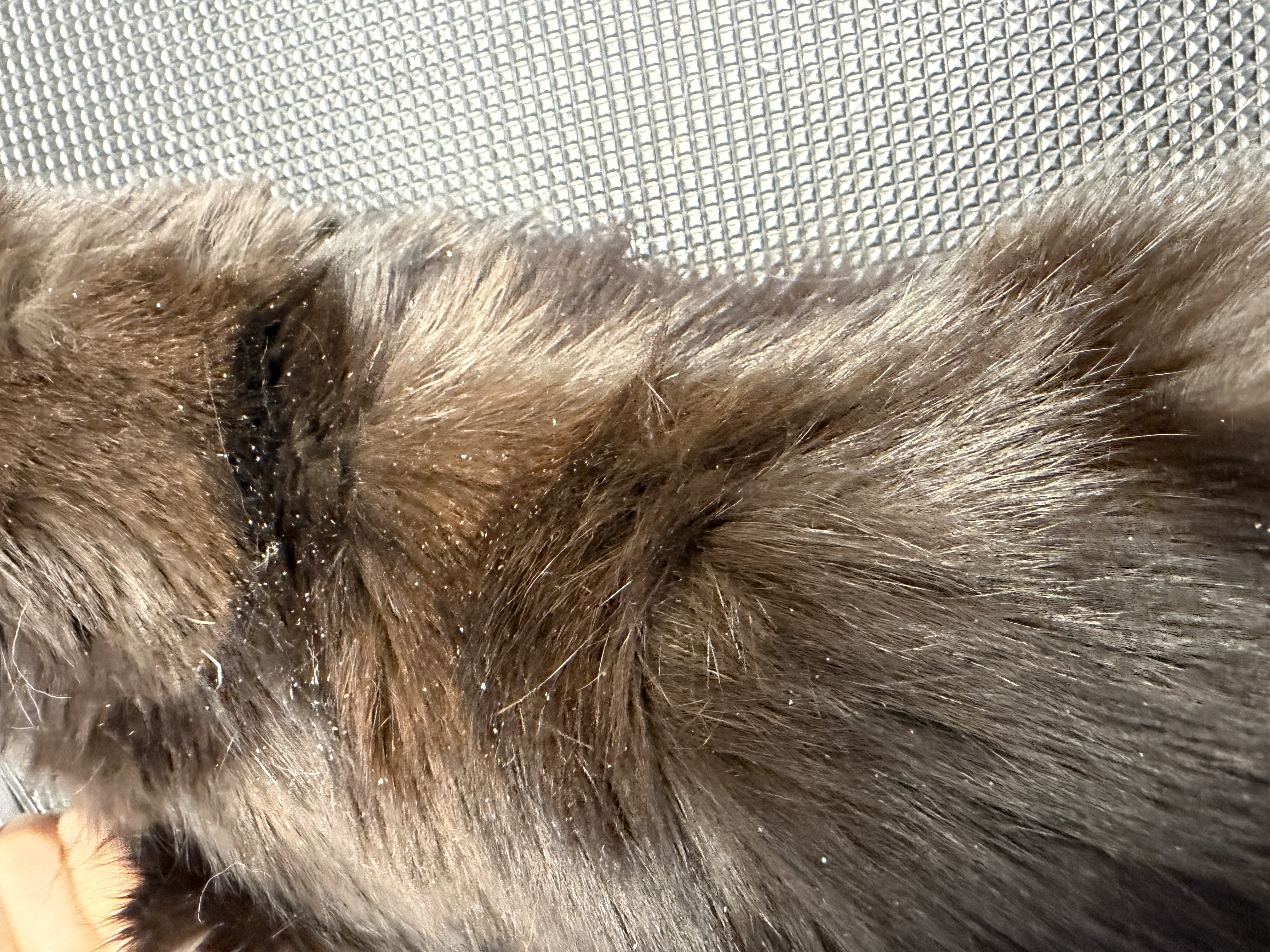
- Greasy coat — an oily feel that doesn't wash out and comes back quickly.
- Waxy buildup — yellow or brown residue, especially along the back.
- Dandruff — white or yellow flaking, sometimes mistaken for simple dry skin.
- Odour — a distinct, unpleasant smell that soap alone doesn't fully resolve.
It's easy to write this off as "just an oily cat" — but a disrupted skin barrier is a welfare issue, not a cosmetic one. Left alone, it's uncomfortable, and it can open the door to secondary infection.
03 — Why Routine Catches It, and One-Off Visits Don't
You can't compare a coat you only see once.
This is the part that makes a grooming schedule more than a nice-to-have: seborrheic dermatitis develops gradually. A groomer who sees your cat every 6–8 weeks builds a baseline — they know what your cat's coat and skin normally feel like, so a change stands out immediately. A groomer meeting your cat for the first time, or the third time in two years, has no baseline to compare against. Neither do most owners, who are patting the same coat every day and don't notice the slow drift the way a trained hand does on a fixed interval.
Early on, seborrheic dermatitis is very manageable. Left to build for months between grooms, it's more uncomfortable for the cat, harder to treat, and far more likely to need a vet visit rather than a wash.
04 — What We Do About It
A wash built for skin that's out of balance, not just fur that's dirty.
When we spot the early signs of seborrheic dermatitis, a standard wash isn't the right tool — the coat needs a shampoo formulated to rebalance the skin, not just clean it.
OUR MEDICATED SHAMPOO WASH
Our medicated shampoo wash is formulated to manage excess oil and flaking gently, without stripping the skin further or masking a problem that needs a proper look. It's part bath, part maintenance therapy — the kind of wash a normal shampoo isn't built to do.
For cats already showing early signs, we recommend building this into the regular grooming rhythm rather than treating it as a one-off — consistent, gentle management tends to keep symptoms controlled far better than an occasional deep-clean.
WHEN WE REFER YOU TO A VET
We're groomers, not vets. Because most seborrheic dermatitis is secondary to something else — allergies, hormonal issues, infection — our job is to catch it early and manage the coat, not diagnose the cause. If what we see doesn't resolve with regular medicated washing, or looks more serious than typical dandruff and oiliness, we'll always recommend a vet visit alongside — not instead of — the grooming routine.
A predictable grooming schedule doesn't just keep the coat looking good. It's how something like this gets caught while it's still simple to manage.
Condition reference drawn from XMMO Cat Academy's Skin & Fur Issues foundation guide.