01 — The Science
Cats remember. For years. On purpose.
Forget the goldfish jokes. Cats hold both short-term and long-term memory, and researchers say those memories can last a decade or more — especially when emotion is attached. A cat's hippocampus doesn't just log what happened. It tags how it felt, then pulls that tag straight back up the next time something similar shows up.
- 10+ — years a fear-tagged memory can last
- 1 — bad appointment is all it takes
Fear, pain, and stress get filed extra deep. That's exactly why one rough vet visit can make a cat hide, hiss, or bolt at the sight of a carrier — years later, with the details long faded but the fear fully intact.
02 — The First Groom
The first time is the only time you get to set the story.
"This place. This smell. This feeling. Dangerous." — that's the whole memory a cat needs. Not a string of bad days. Just one.
Here's what most people miss: you don't get to make up for it later, not the way you would with a person. A cat can't hear an apology. It can't be talked round with logic. It only has the memory of the event itself — and once that's coded as bad, every future groom starts from behind, the cat walking in already braced, already convinced it knows how this ends.
Reversing that association takes weeks or months of deliberately calm experiences to undo thirty seconds of fear. Some cats never fully unlearn it. That's the real cost of a rushed first appointment — not one bad day, but a lifetime of a cat that fights the carrier, the table, and the groomer, every single time.
03 — Why Fear Free
The humane response to what we know about feline memory.
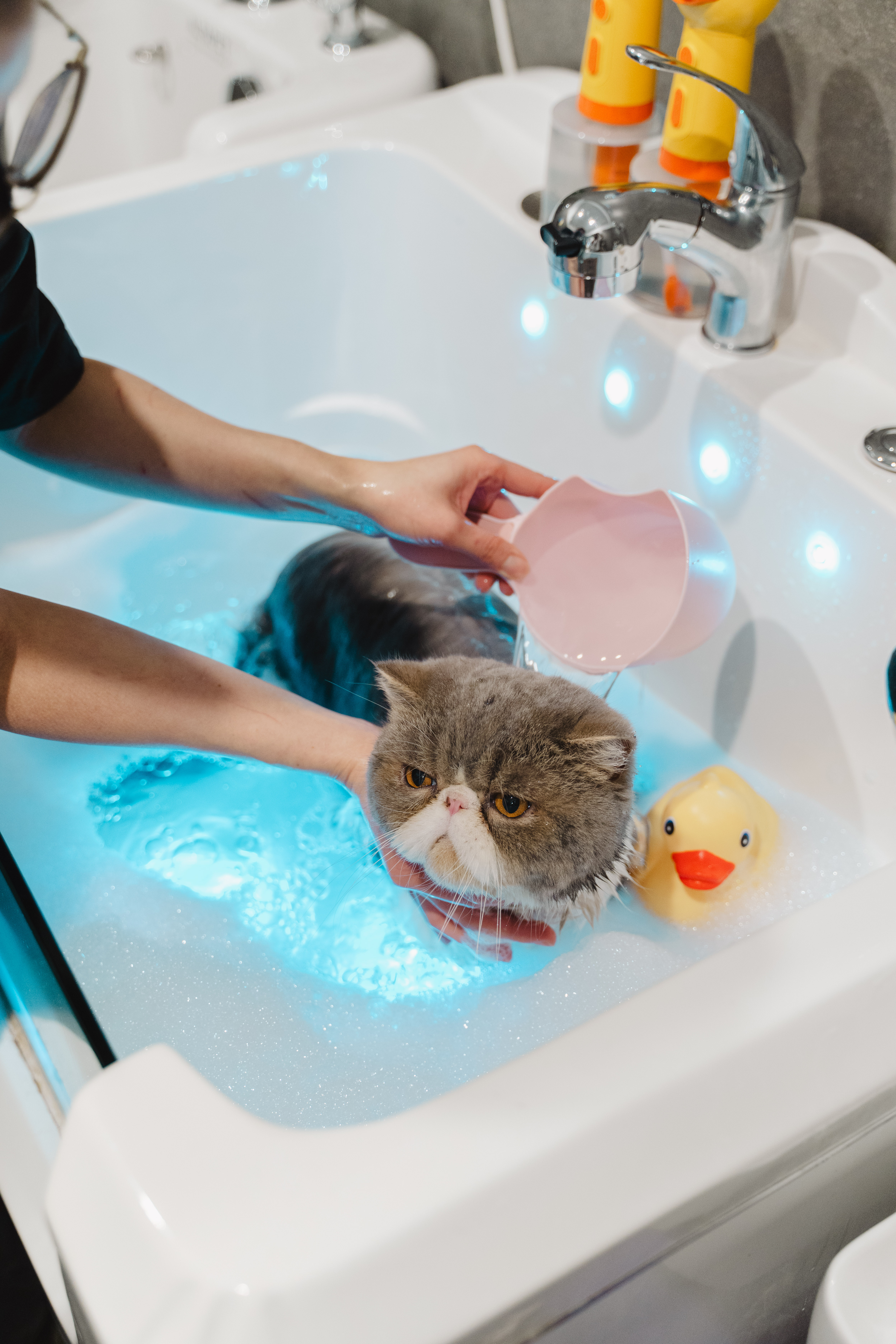
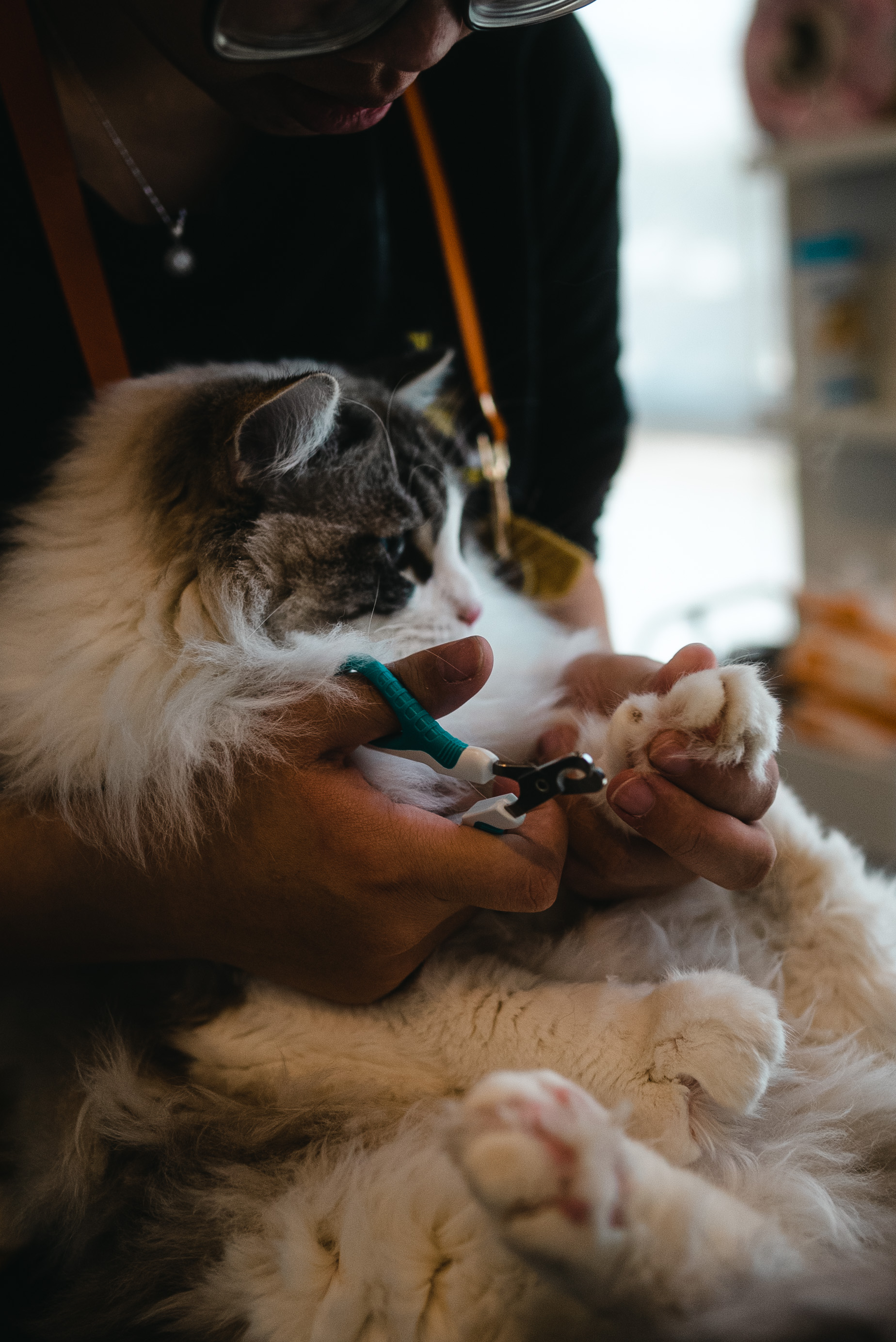
Fear Free isn't a label at XMMO — it's a framework built directly on how cats process fear and stress, and it's the standard every groom gets, first appointment or fiftieth.
In practice: we read the cat before we touch the cat. We watch body language, not the clock. We slow down when a cat needs slow, and we stop before "uncomfortable" tips into "traumatised." A cat can't consent and can't explain what's wrong — fear, freezing, or flight is the only language it has. If cats remember bad experiences for years, the only responsible way to groom one is to make sure there's nothing bad to remember.
04 — A Second Layer
For the cats who panic before we've even opened the carrier.
Some cats are wired to spiral no matter how gently we work. For those cats, it's worth asking your vet about a pre-groom dose of gabapentin — a prescription medication already used before stressful vet visits and transport. Studies on cats with a history of fear or fractious behaviour show it measurably reduces stress and improves compliance during handling, with minimal side effects at the doses vets use.
TALK TO YOUR VET
It's not sedation for our convenience. It takes the edge off a nervous system that's already decided to panic, so your cat can actually experience the calm groom we're trying to give it — instead of just enduring it.
We get the hesitation. Medicating your cat before an appointment can feel like giving up, or like drugging them to get through the day. Flip it: cats aren't small humans. They can't reason their way out of fear, and they can't override a system flooding with stress hormones the moment the carrier appears. Giving prescribed support isn't failing your cat — it's recognising their limits instead of asking them to white-knuckle through something they never agreed to. That's not weakness. That's love, with a vet's signature on it.
The goal was never "get the groom done." It's making sure the memory your cat walks away with makes the next one easier — not harder.